Stacey Dooley’s Fluted Walnut Kitchen
Liverpool
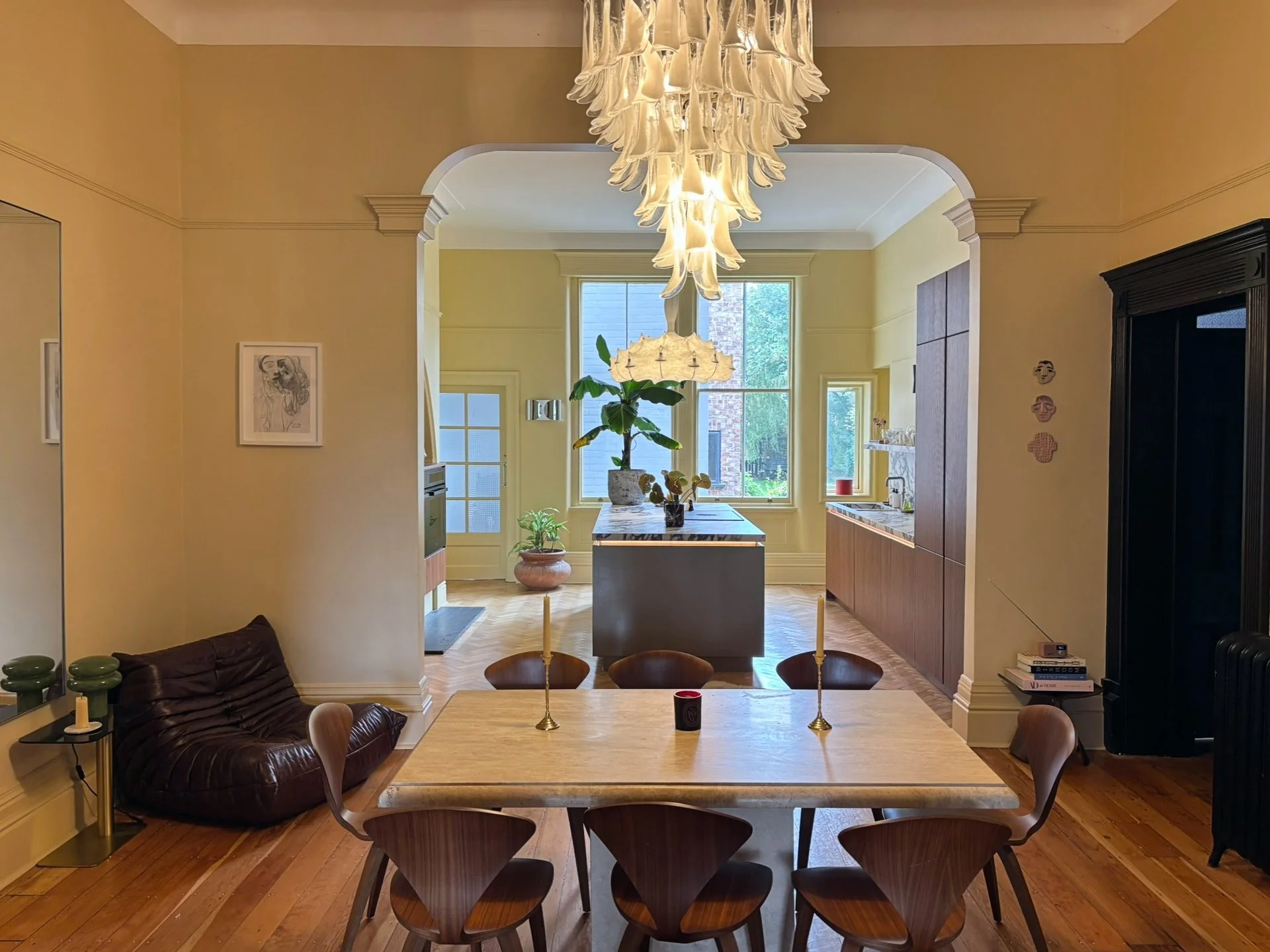
This kitchen sits inside one of Liverpool’s most remarkable private homes: a historical listed property now owned by Stacey Dooley.
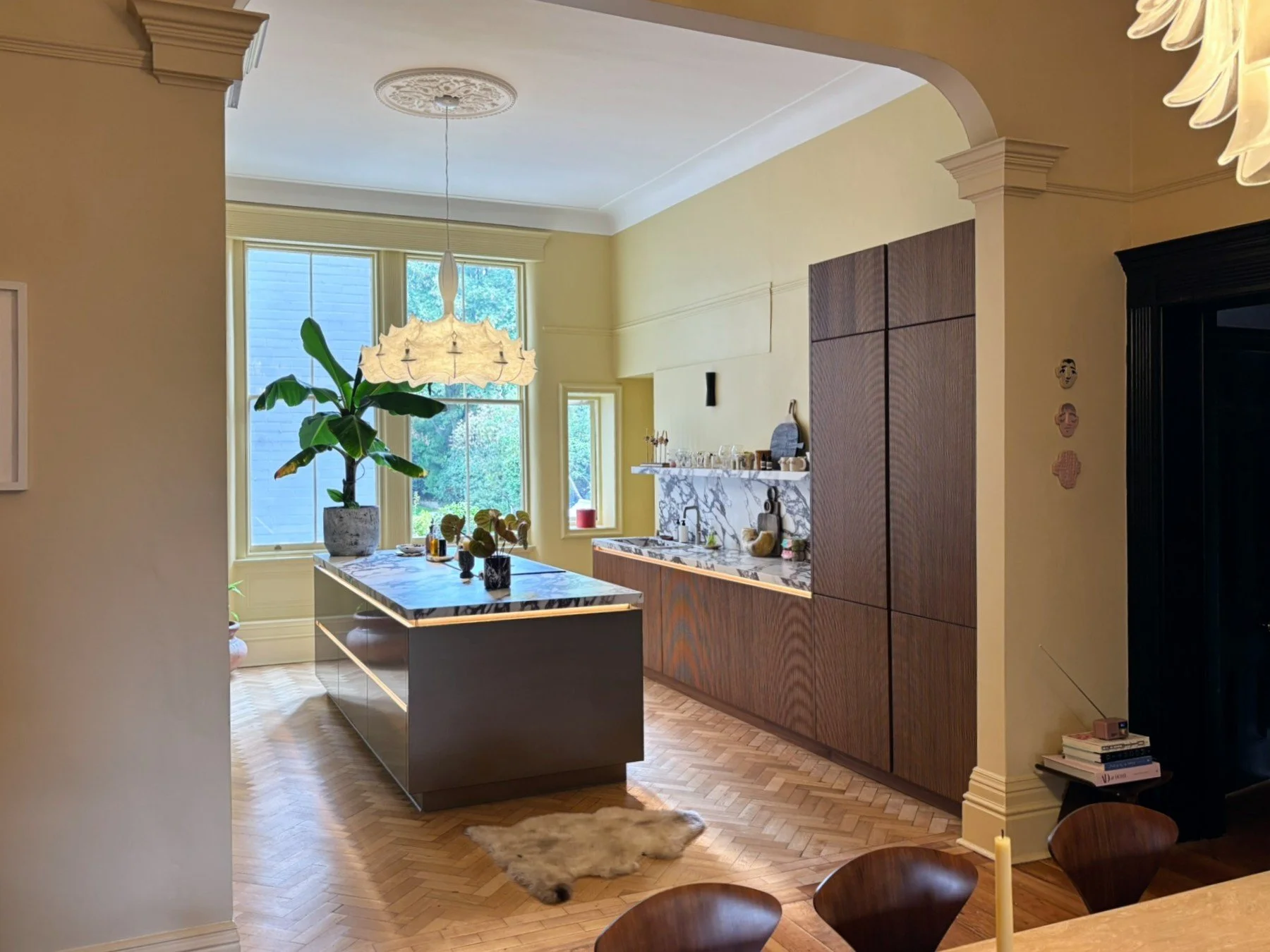
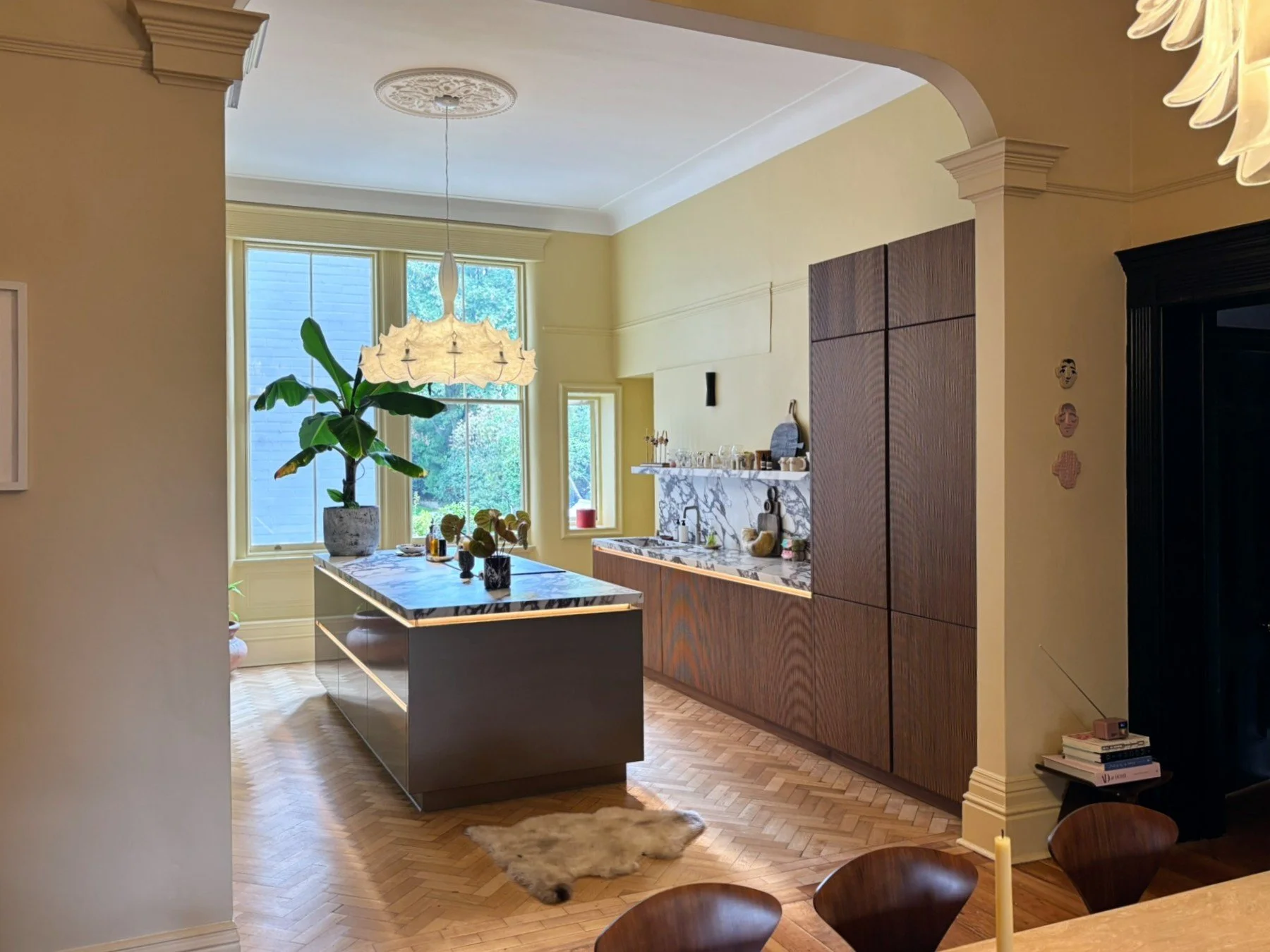
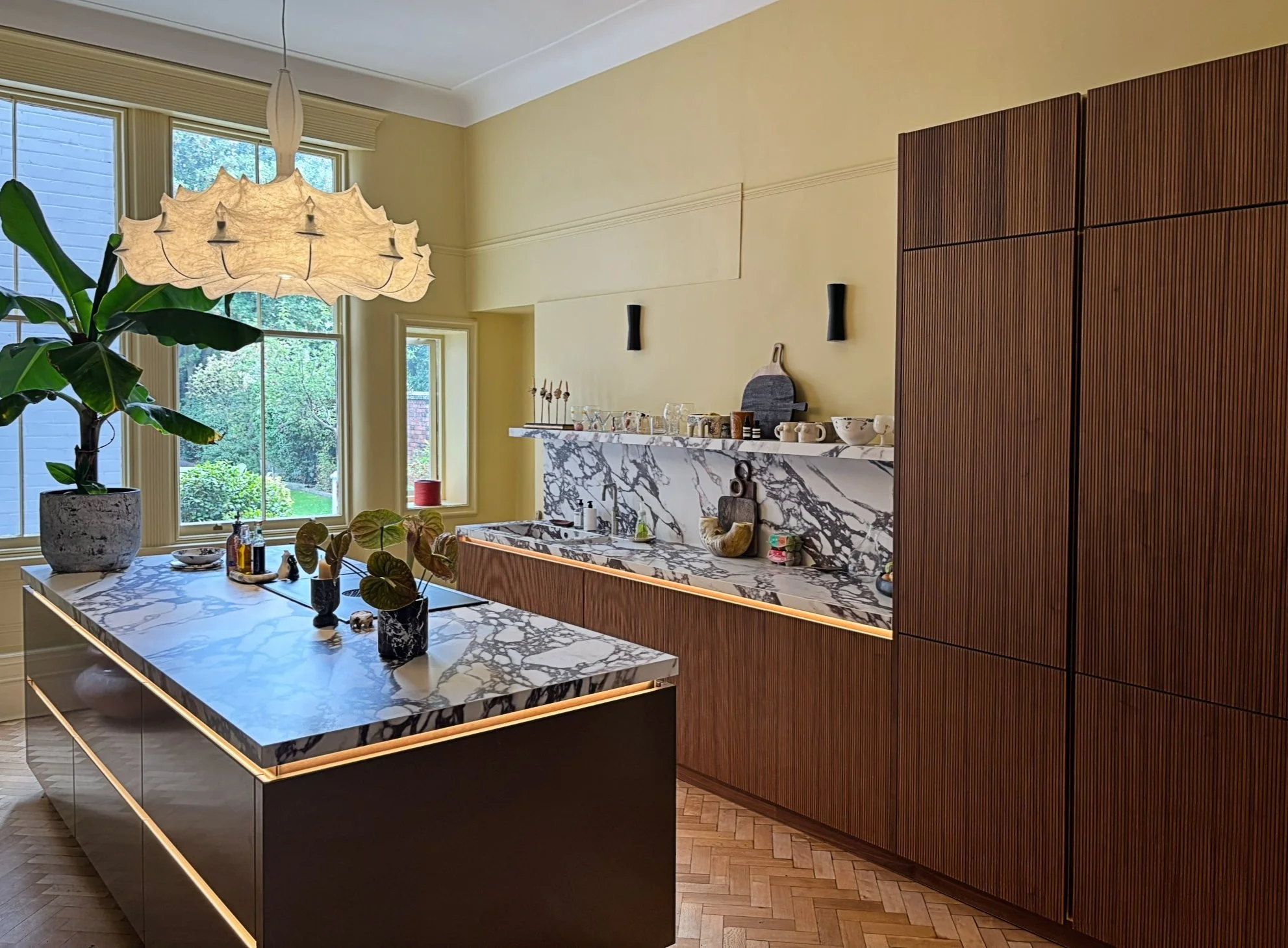
With extremely high ceilings and original features that set the tone for every design decision made within it, the fluted walnut cabinetry, Häcker Systemat AV7070 Brushed Bronze island, and Calacatta Viola porcelain worktops earn their place in a room of this character. The result is a kitchen that feels calm, carefully considered and completely at home in a listed property.
Project Details
-
The relationship between Samuel Neal and the client, Stacey Dooley, began some time before this kitchen was installed. Sam had originally visited her home in London to measure up and discuss a design: a client meeting was held at our Häcker showroom in central London and a brand new display in walnut immediately grabbed Stacey’s attention, though a concrete finish was also being considered as a possible alternative for that particular property. Before the project moved forward, Stacey relocated to Liverpool, and the conversation started again in a very different context.
The Liverpool home changed everything. The scale, the ceiling height, the listed status and the original fabric of the building all had a direct bearing on what the kitchen could and could not do. The walnut, which had always been the instinctive choice, made even more sense here. The brief was to design a kitchen that worked properly in the space, made full use of what was available, and did not interfere with or damage any of the existing features of the building.
-
Working in a listed building requires a particular kind of discipline. The instinct in a large, well-proportioned kitchen space is often to open things up and maximise the footprint, but listed status means structural and fabric interventions are limited. Sam’s approach was to work with what was there rather than against it, maximising the usable space within the existing envelope and making design decisions that felt sympathetic to the building.
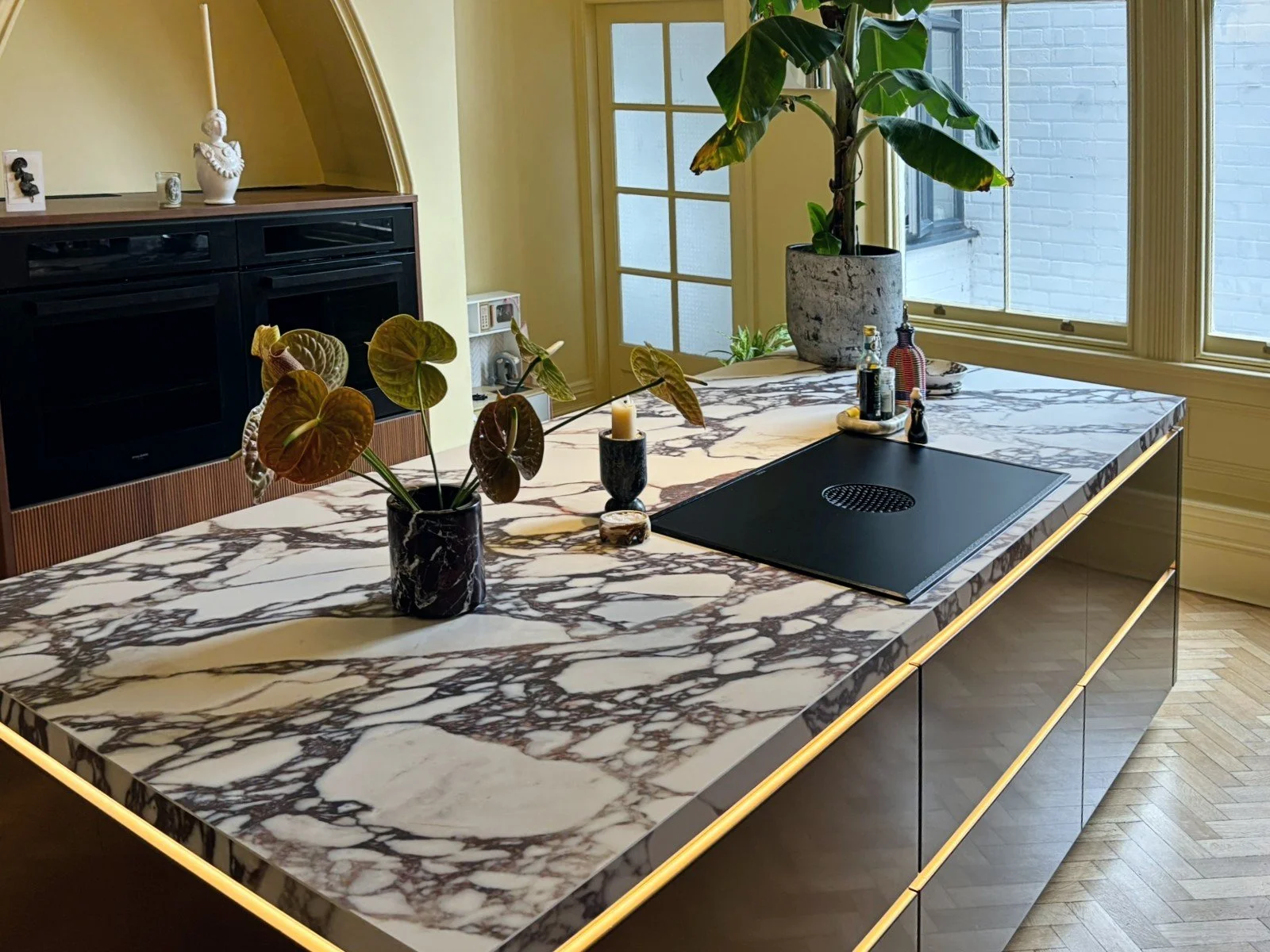
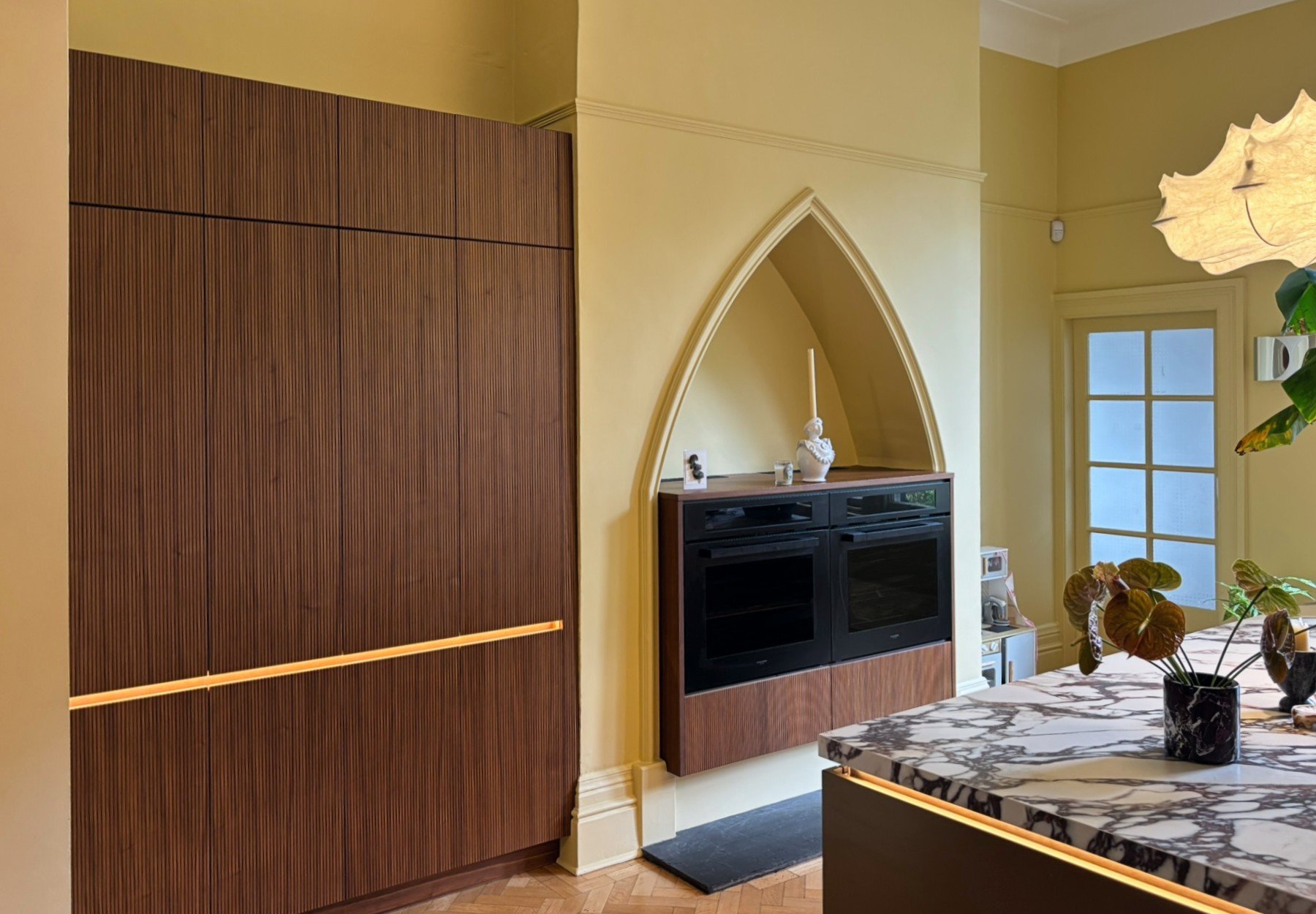
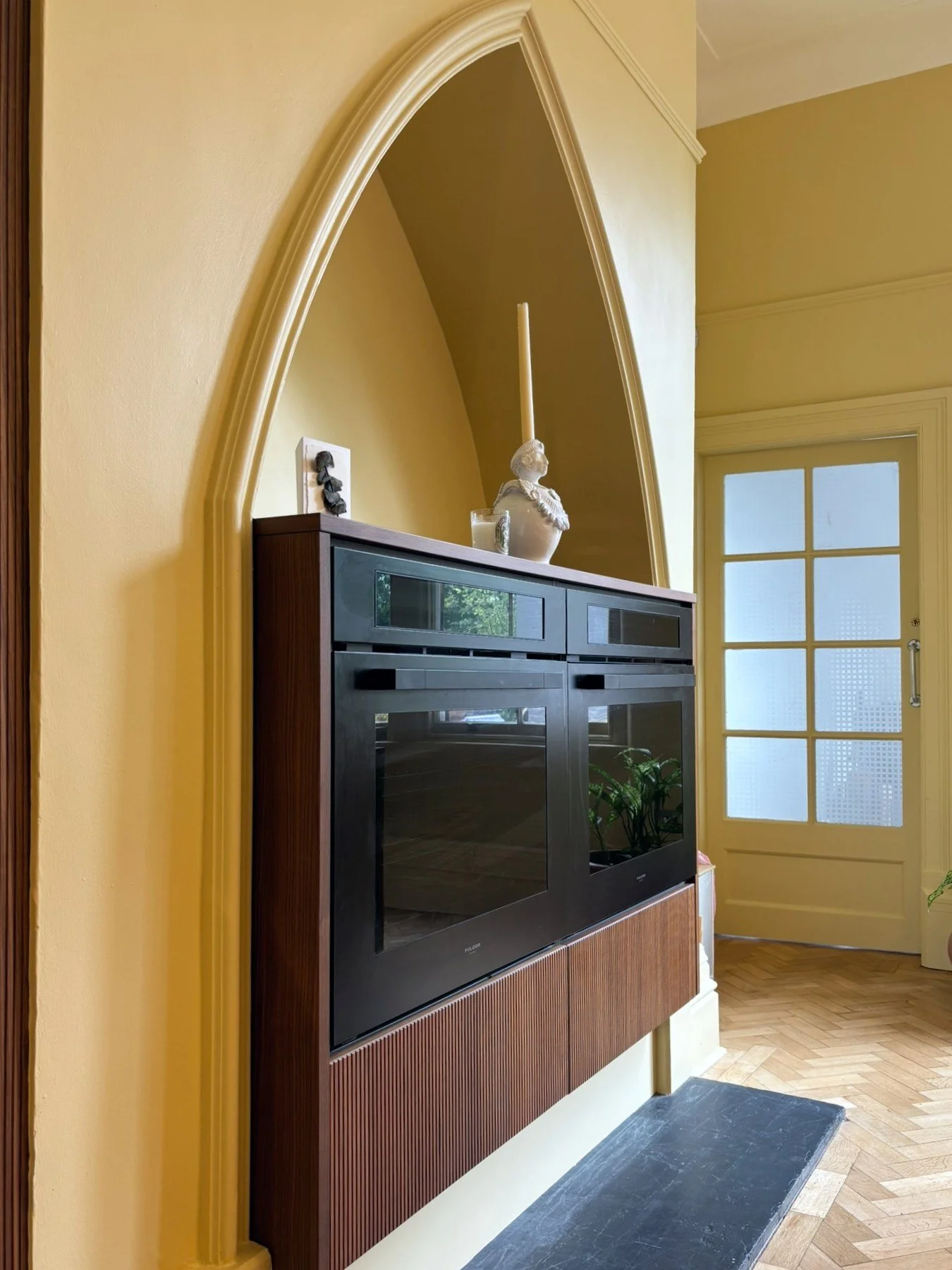
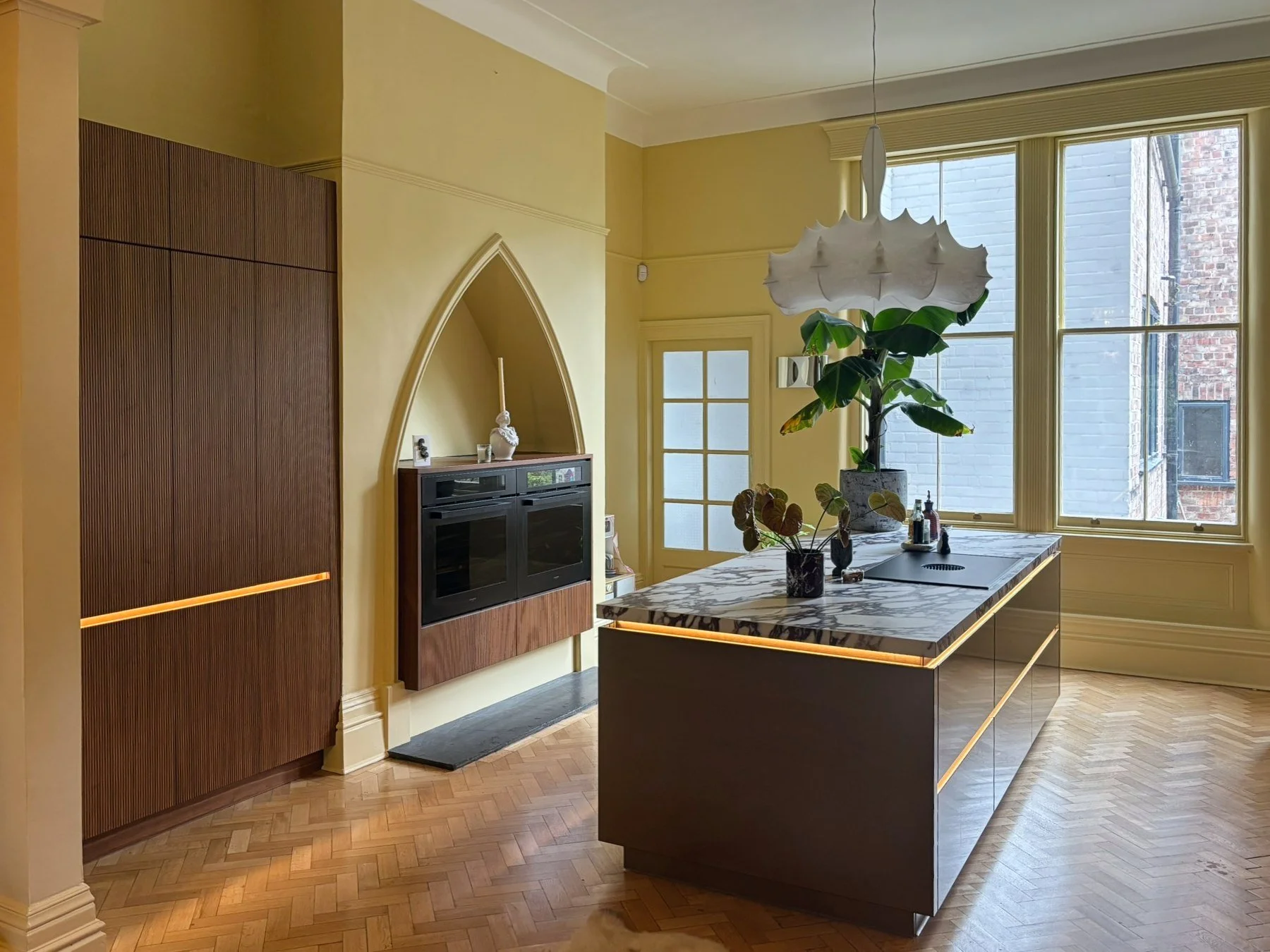
The most considered decision in the layout was the placement of the two large ovens. Rather than introducing a new tall unit or tower into the space, they were built into the existing recess where the original range cooker had stood, with a display area above. The recess was already there as a feature of the room; using it for the ovens preserved that sense of the original architecture while giving the kitchen the cooking capacity it needed. It is a good example of the kind of practical thinking that makes a kitchen feel as though it belongs to a building rather than having been shoehorned into it.
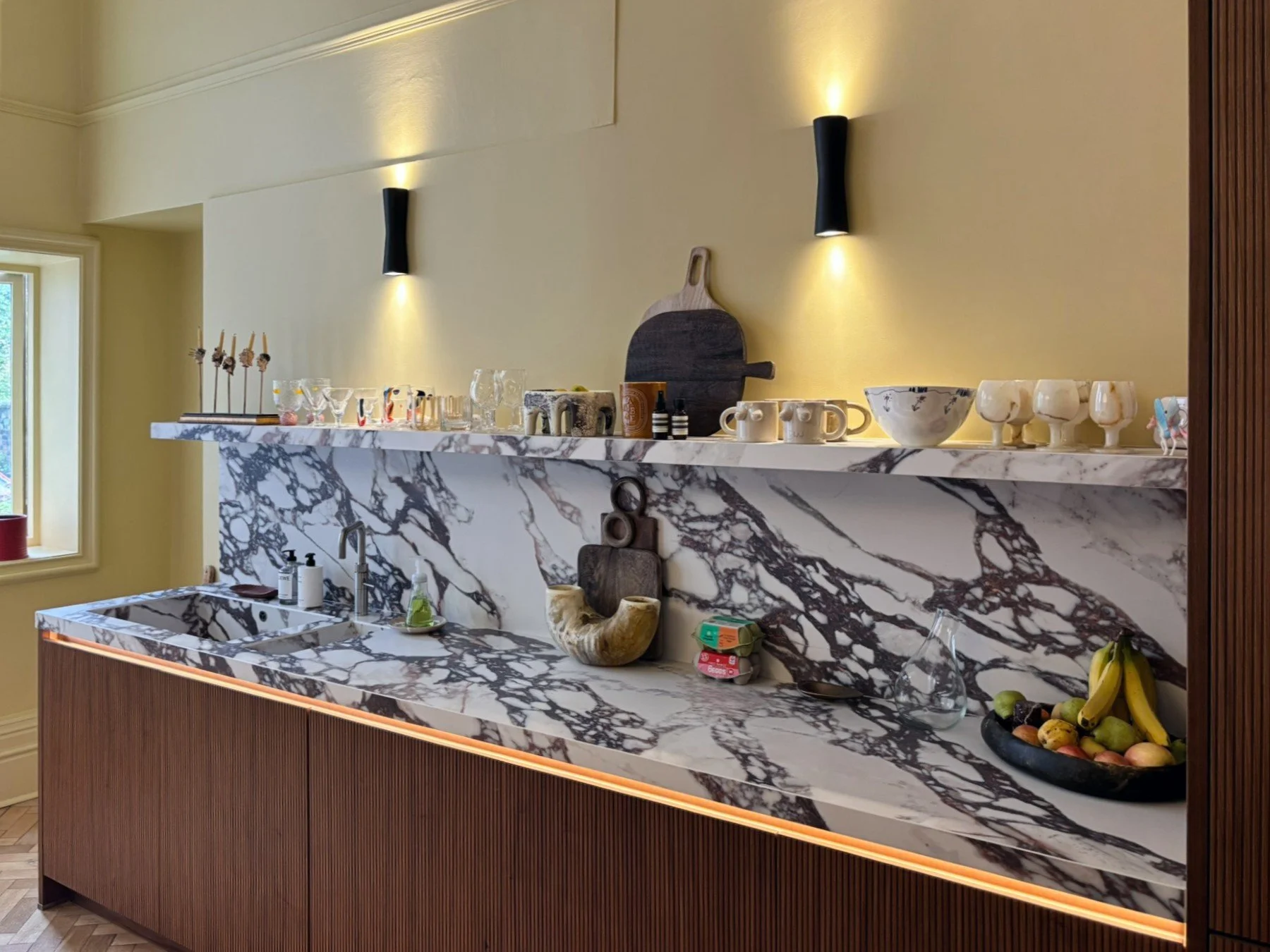
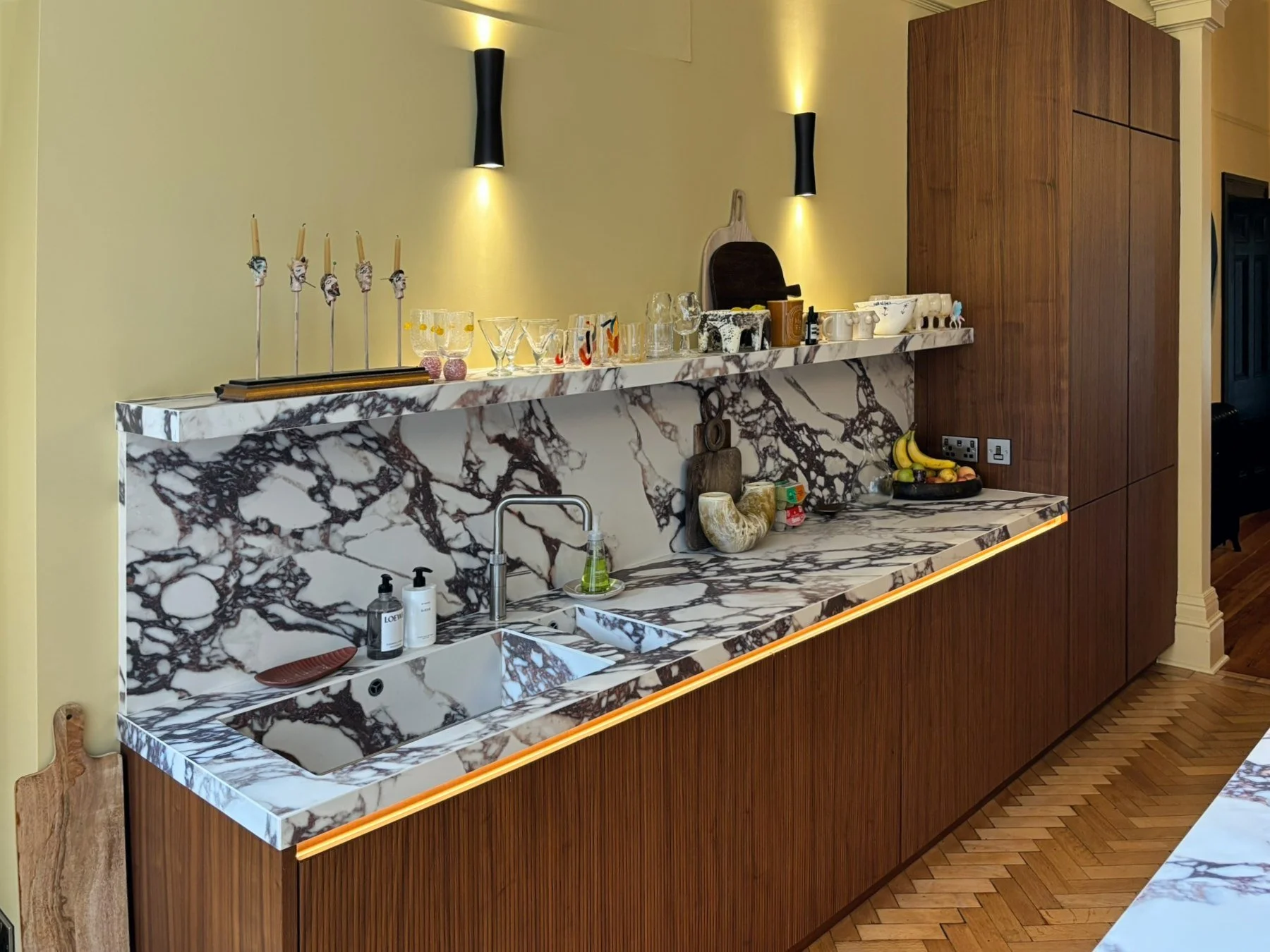
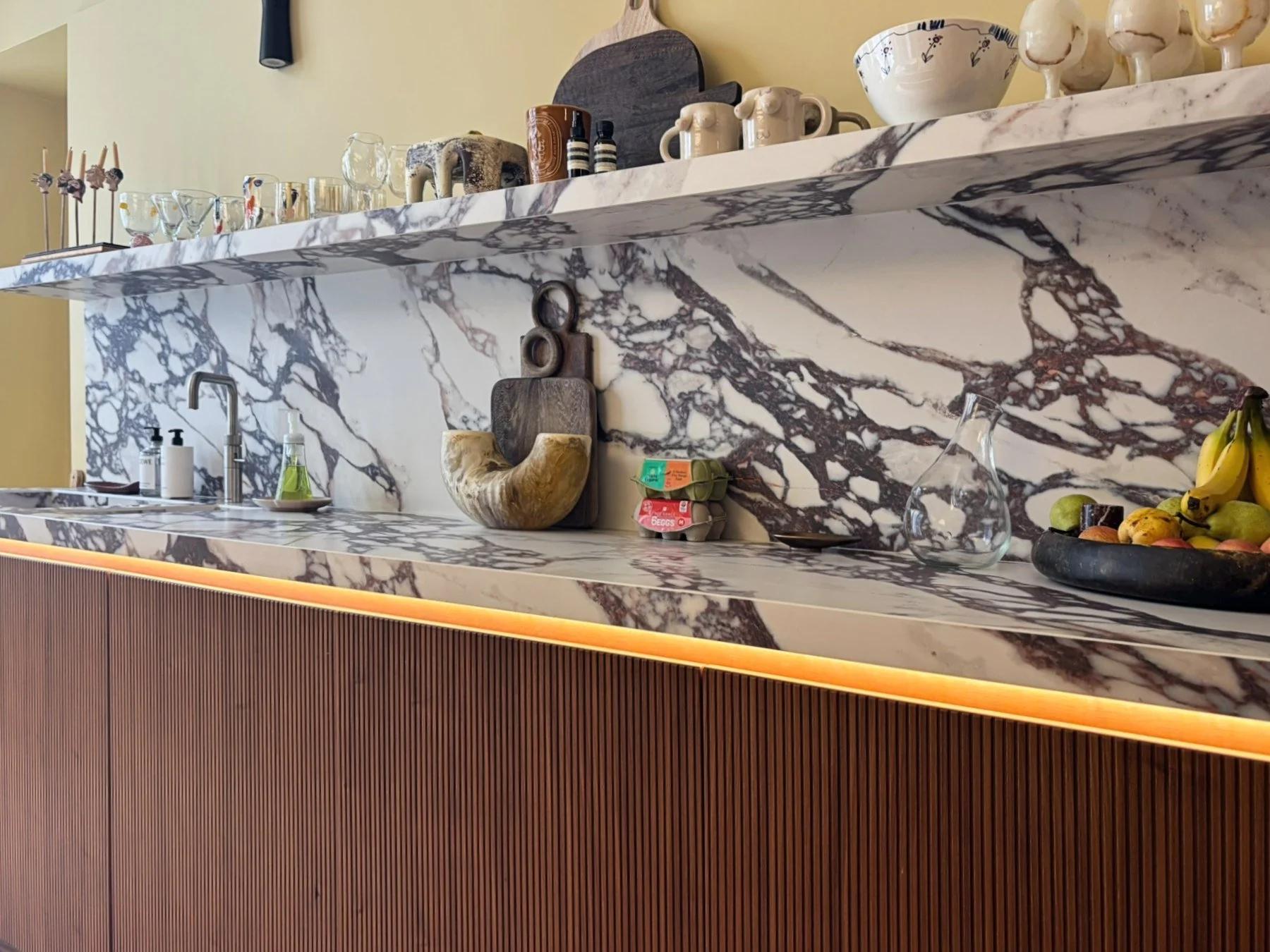
On the sink run, Stacey chose not to have wall units. A box shelf above the worktop keeps the wall open and lets the height of the room do its work, which is the right call in a space with ceilings of this proportion. It also gives the kitchen a lighter, less fitted feel that suits the overall direction of the design.
-
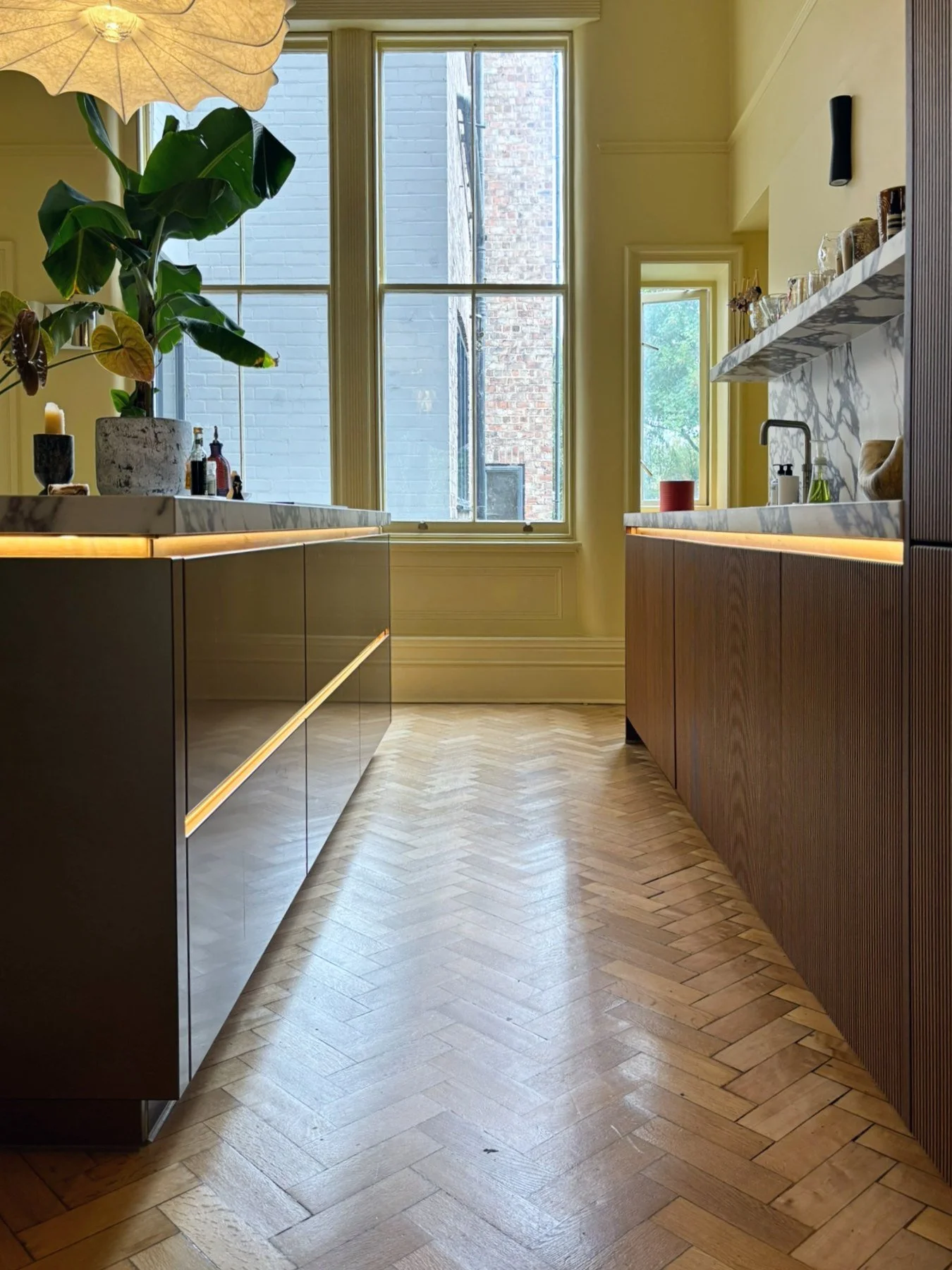
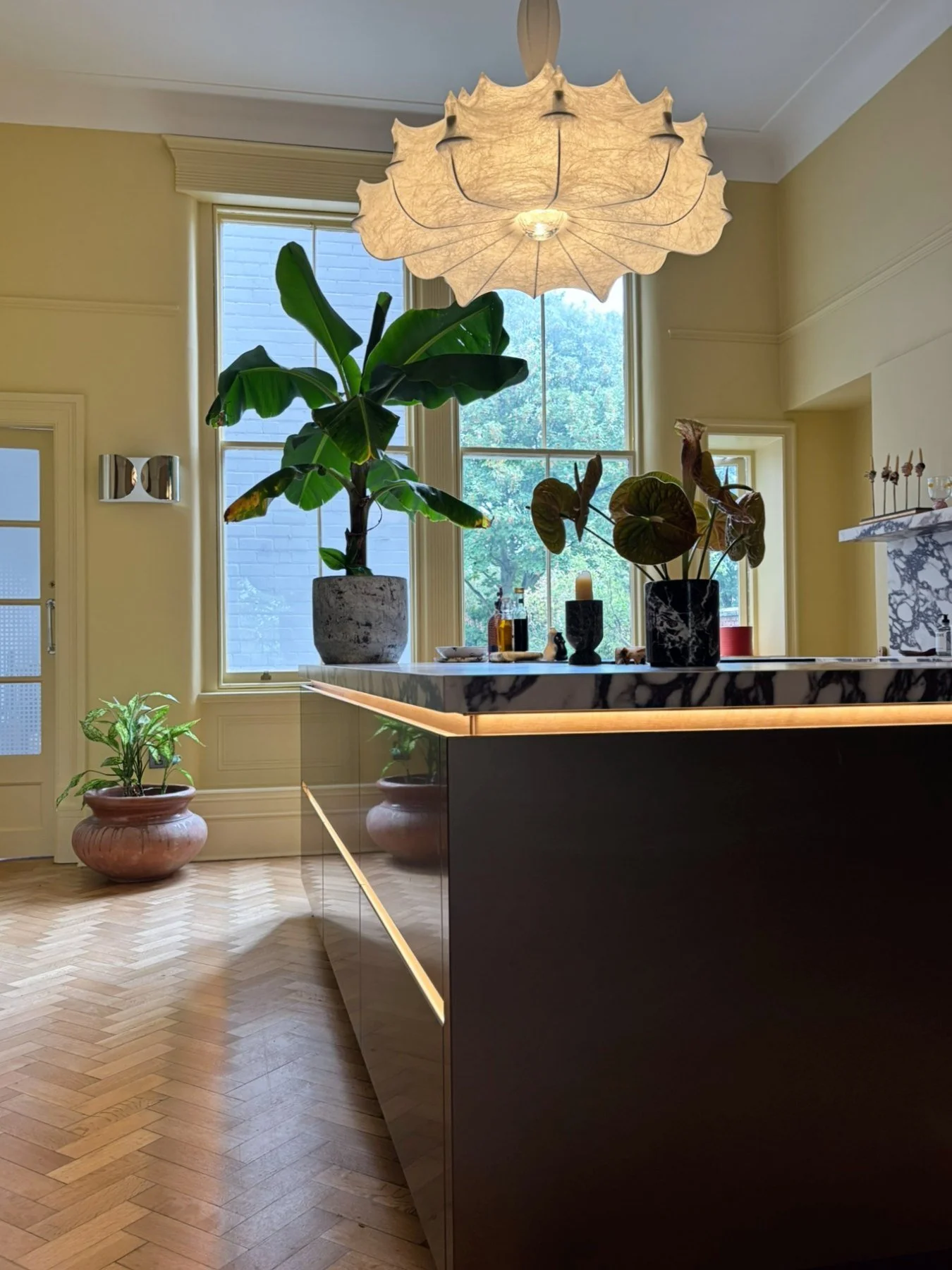
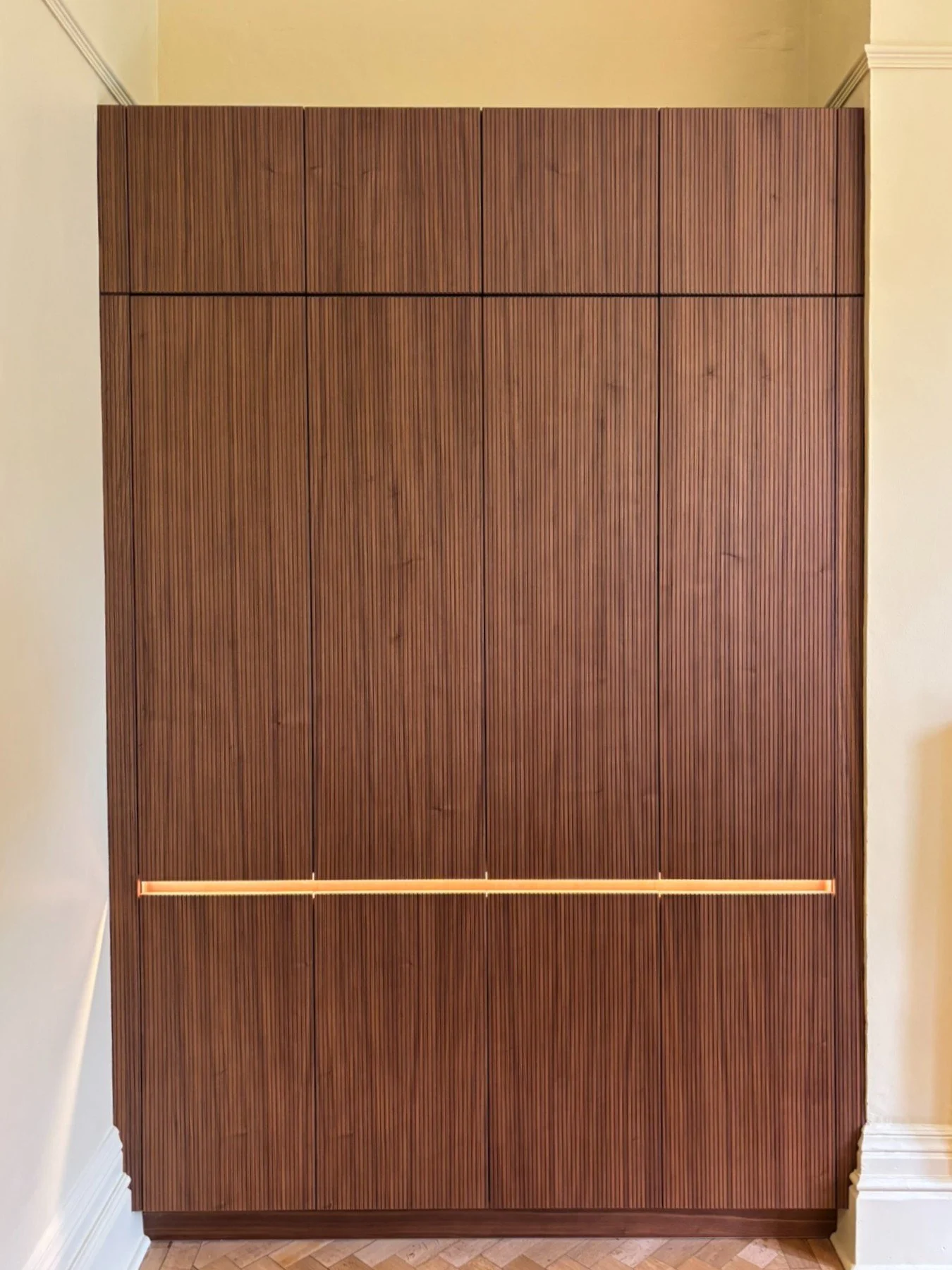
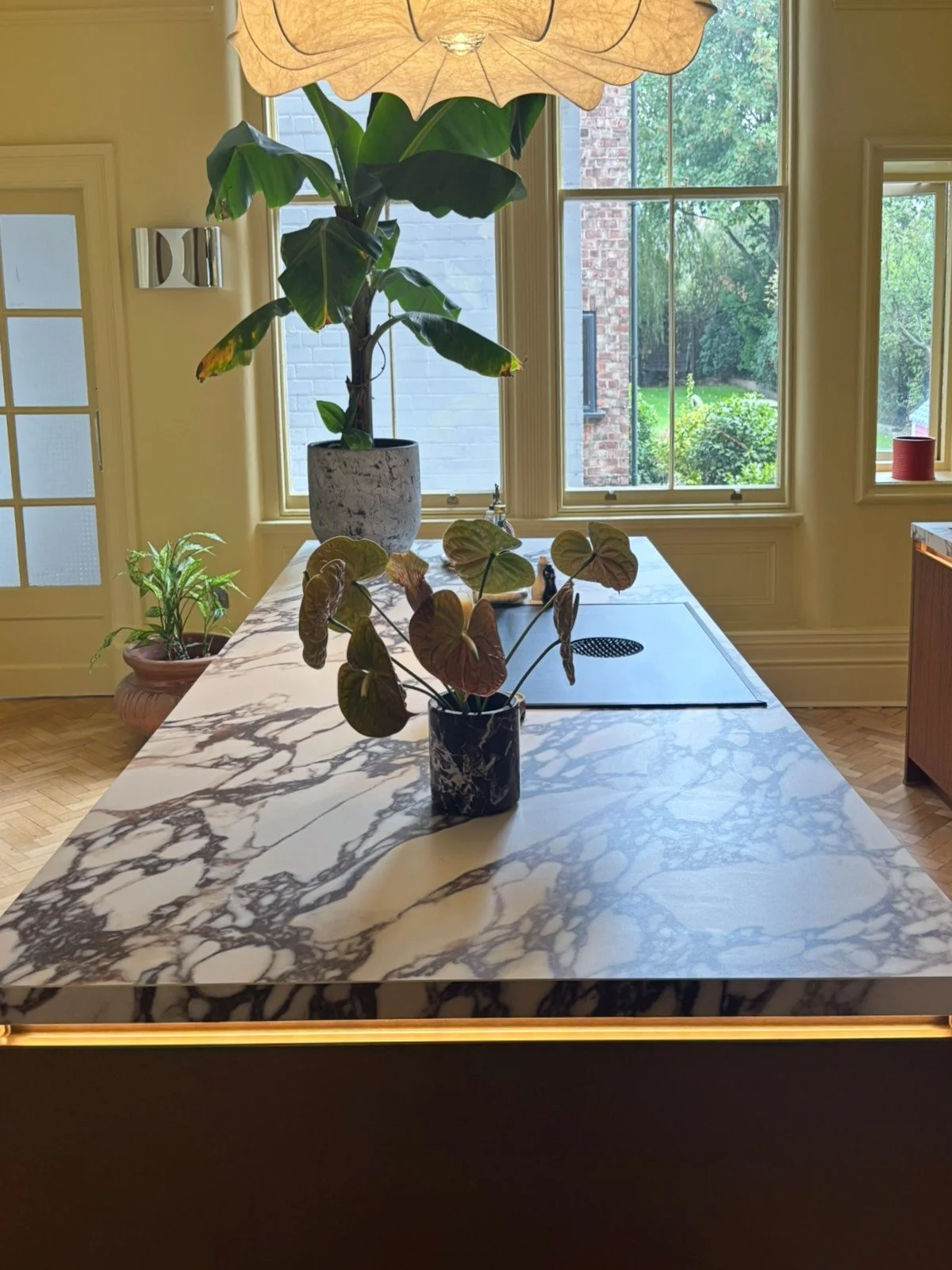
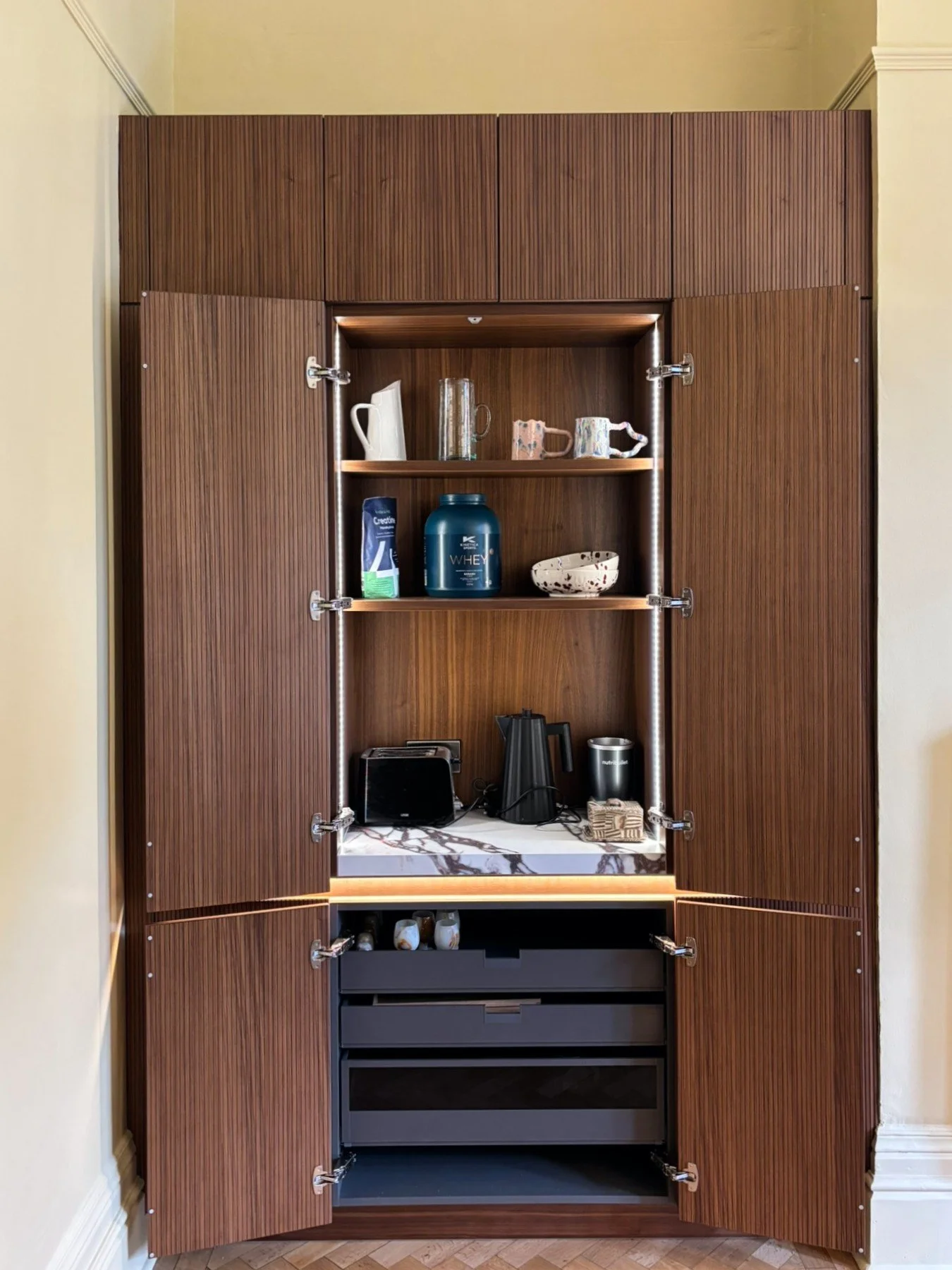
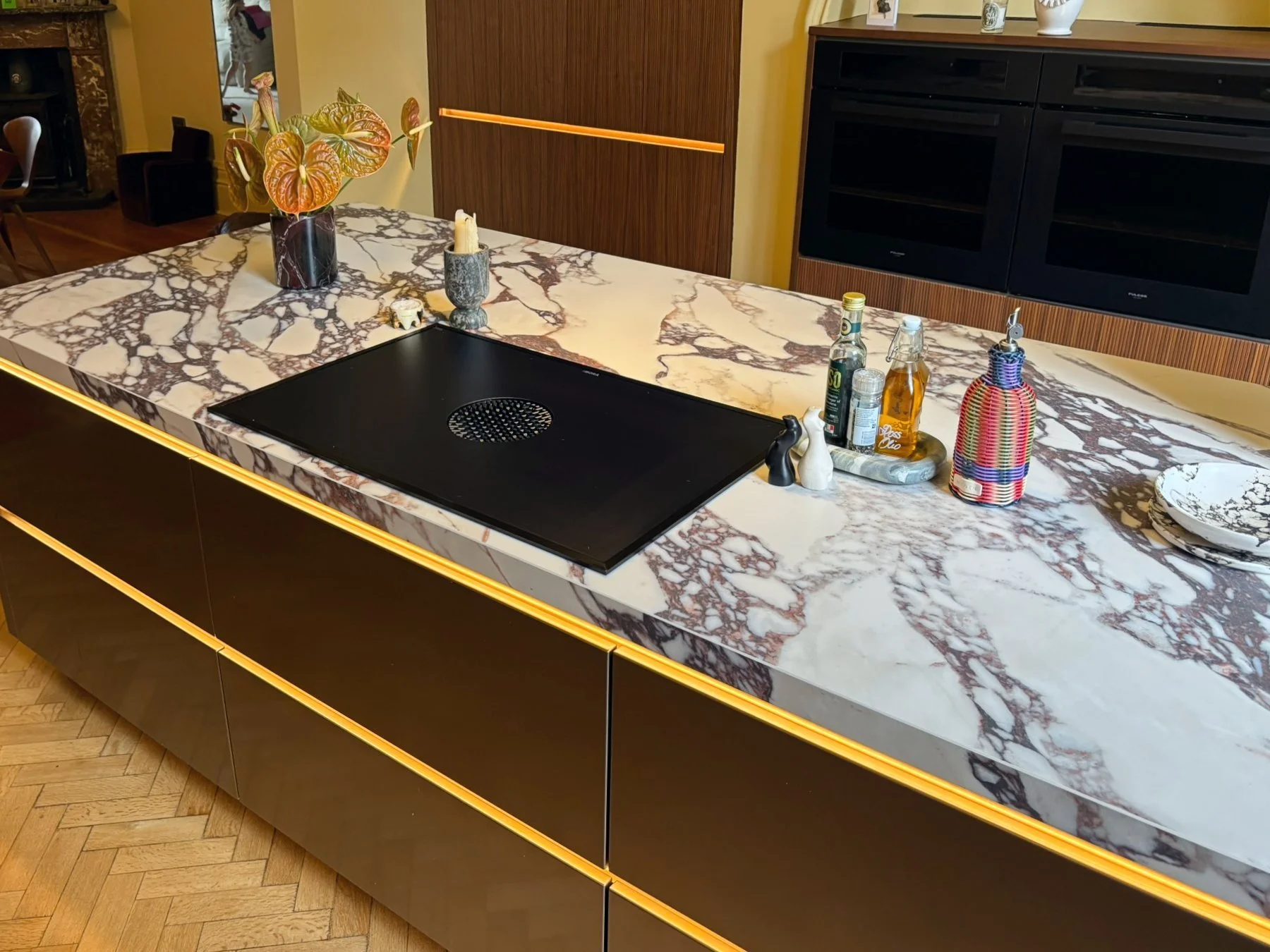
The cabinetry is Häcker Systemat with fluted walnut doors: a textured natural material that brings warmth and depth into the kitchen without competing with the character of the building around it. The island is finished in Häcker Systemat AV7070 Brushed Bronze, chosen by Stacey as a contrast to the walnut and a reference to the warm metallic tones that suit an interior of this age and quality. Stacey was closely involved in selecting the finishes throughout, and the choices reflect a clear personal vision for how the space should feel.
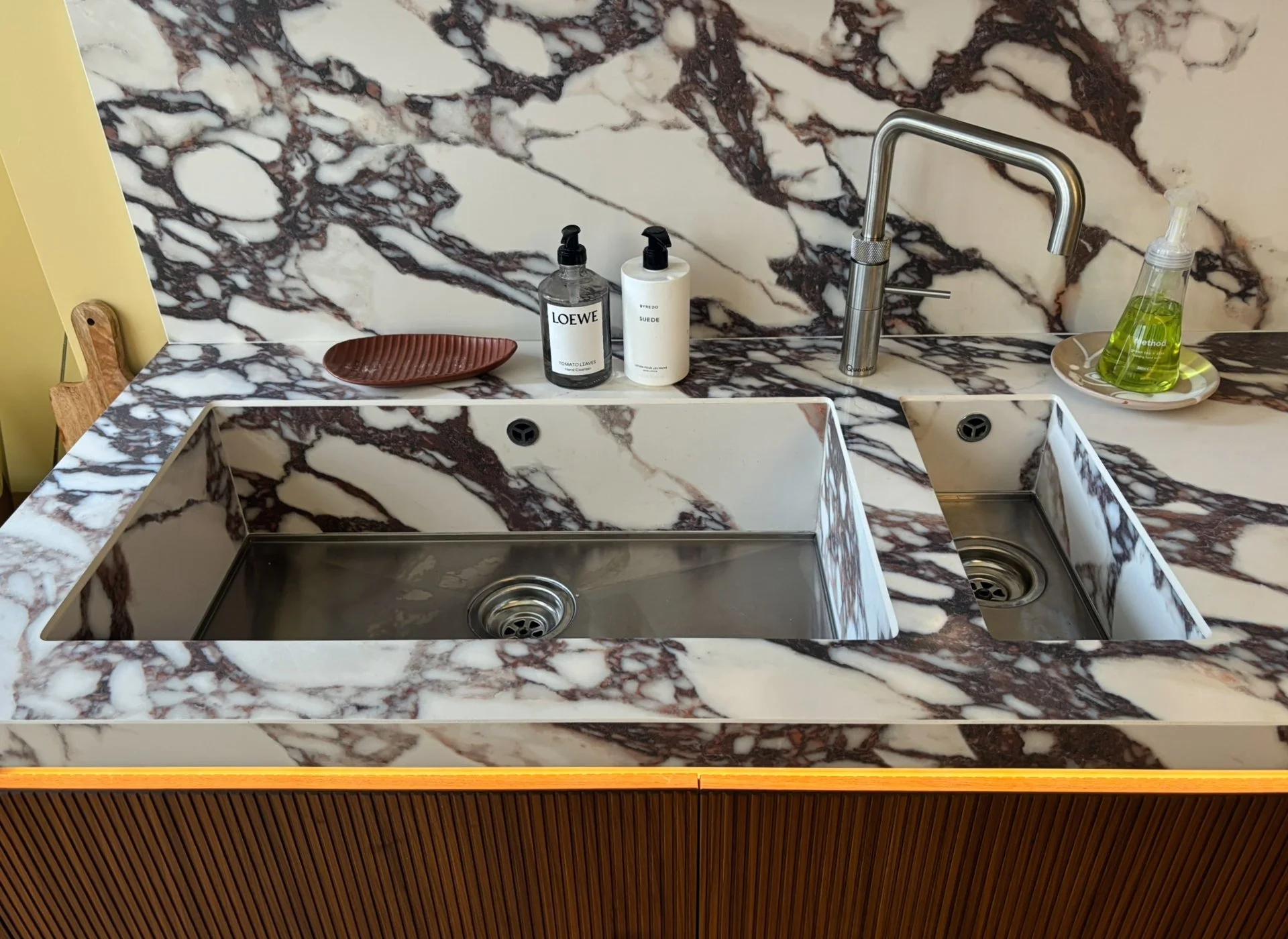
The worktops are porcelain in a Calacatta Viola finish, a surface with strong natural veining that works exceptionally well alongside the walnut and bronze. The Axis sinks are moulded in the same porcelain material as the worktop, so the transition from surface to bowl is entirely continuous: there is no visible join, no contrasting material and no interruption to the visual line of the worktop. It is a detail that requires careful specification but makes a significant difference to the finished quality of the sink area.
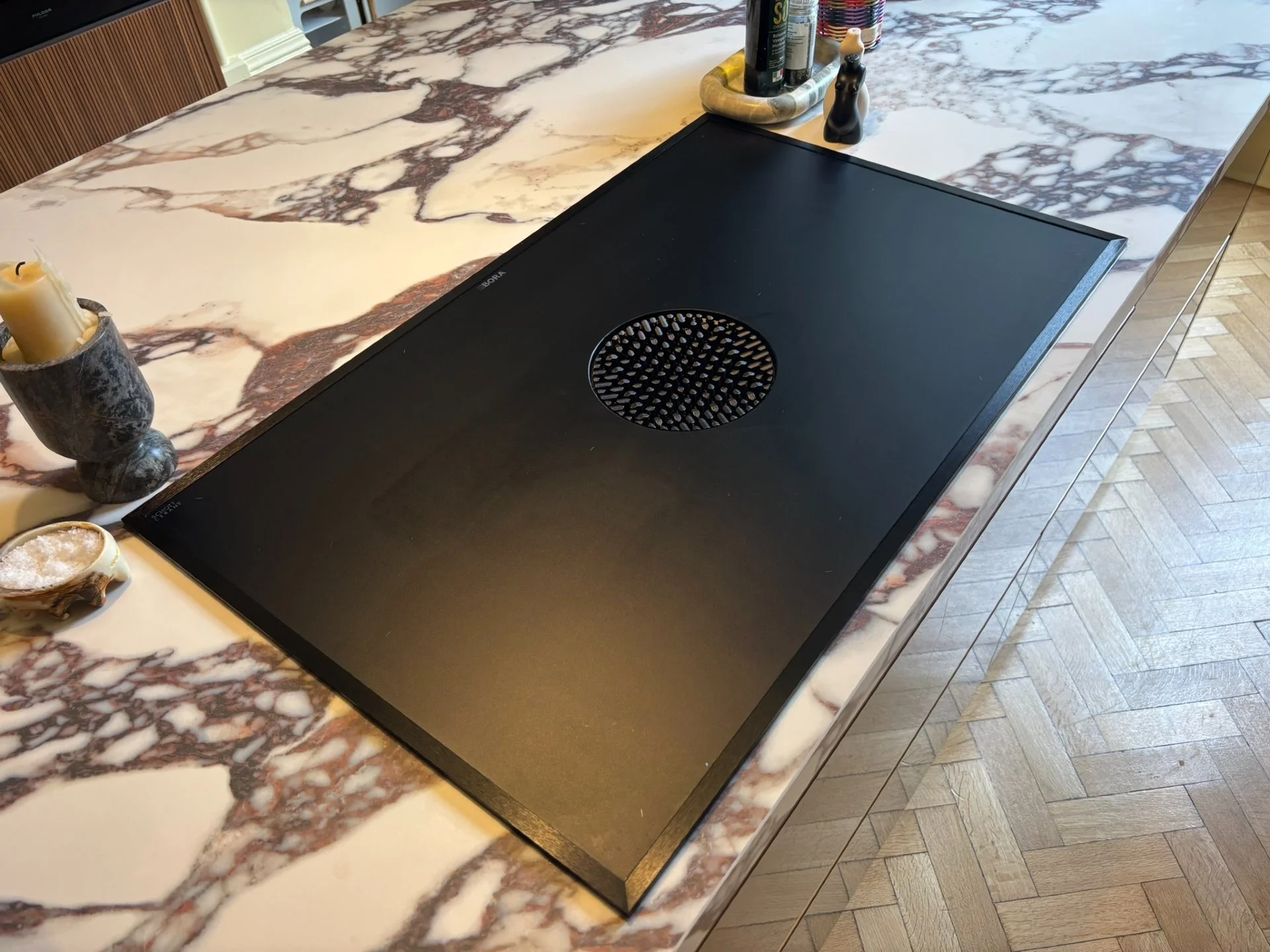
Appliances include a Bora X Pure with a matt glass finish on the island, a Neff Fridge Freezer, and two Fulgor UrbanTech Touch 30-inch ovens in matt black (an unusual specification that suits a household and a kitchen of this scale). The Quooker Fusion in Stainless Steel is fitted at the sink, with a CUBE system providing both chilled filtered water and chilled filtered sparkling water. Integrated LED strip lighting with remote control is built into the handleless rail throughout the kitchen, providing task lighting at worktop level without the need for additional fittings. A statement pendant was chosen above the island to give the space a proper focal point at ceiling level, which matters considerably in a room with ceilings as high as these.
-
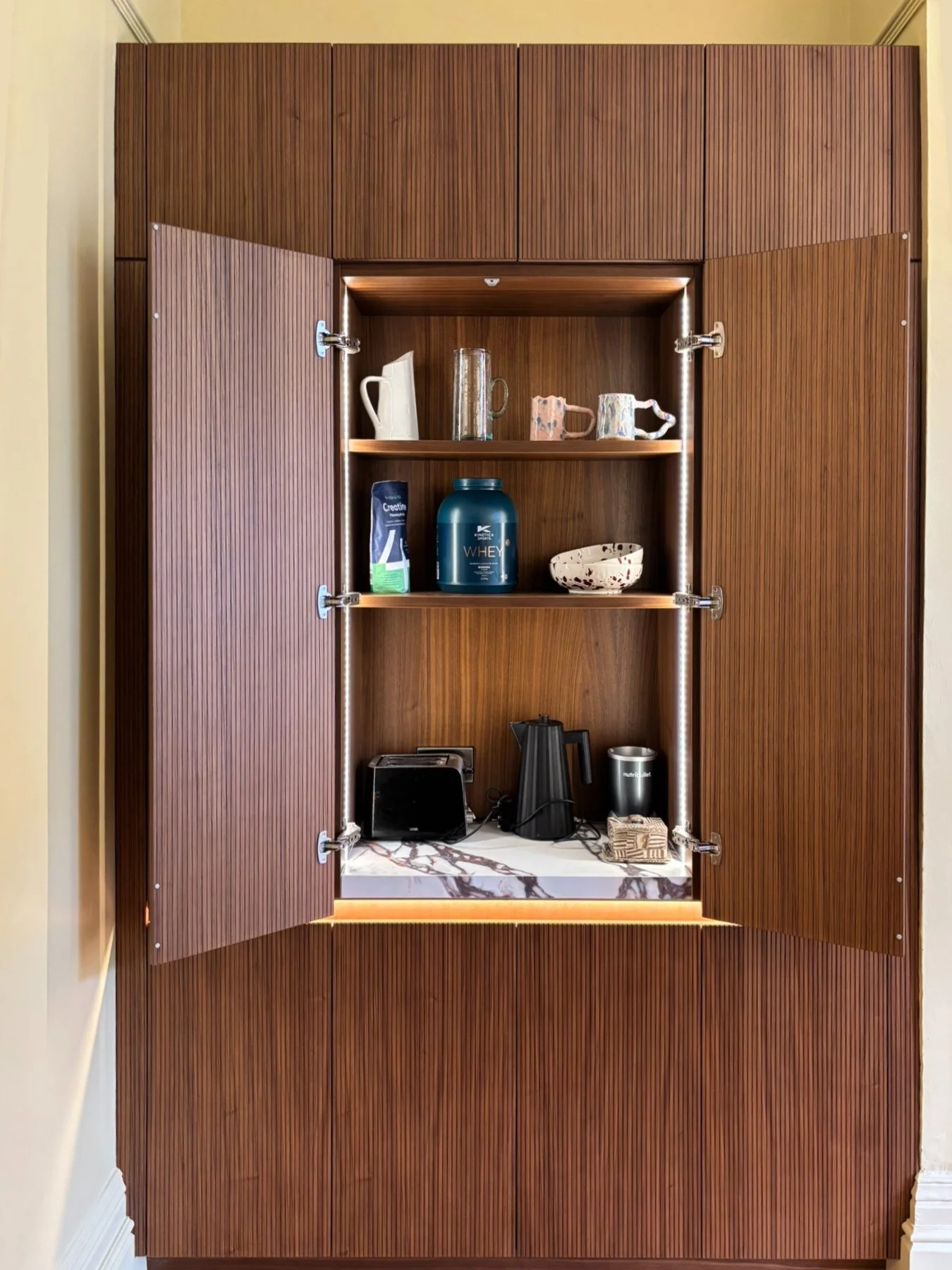
The breakfast pantry is one of the more practical features of the design, providing enclosed storage for smaller appliances and day-to-day items that would otherwise interrupt the calm of the main kitchen surfaces. In a kitchen where the worktops are as carefully specified as these, keeping them clear is worth planning around from the start.
The combination of the fluted walnut, brushed bronze and Calacatta Viola porcelain gives the kitchen a material richness that suits the scale and character of the house. None of the three materials is trying to be neutral or invisible. They are all present, all confident, and they work together because the proportions of the room are large enough to carry them. In a smaller space the same combination might feel heavy. Here it feels right.
-
The project required careful coordination given the listed status of the property and the constraints that places on what can be done on site. Sam remained closely involved throughout the design development and installation, ensuring the kitchen was delivered in a way that respected the fabric of the building and met the standard the property demands.
-
This is a kitchen that was shaped by its building as much as by its brief. The listed status, the ceiling height, the existing recess, the scale of the room: all of these had a direct bearing on how the design was resolved. The result is a kitchen that feels genuinely suited to where it sits, with materials and detailing that hold their own in an exceptional property without overstating themselves. It is also, beneath all of that, a practical and well-planned kitchen that works properly for the people who use it every day.
Planning your own kitchen project? Visit the Samuel Neal showroom in Grimsby or book a design appointment to get started.