Black Handleless Kitchen
Grimsby
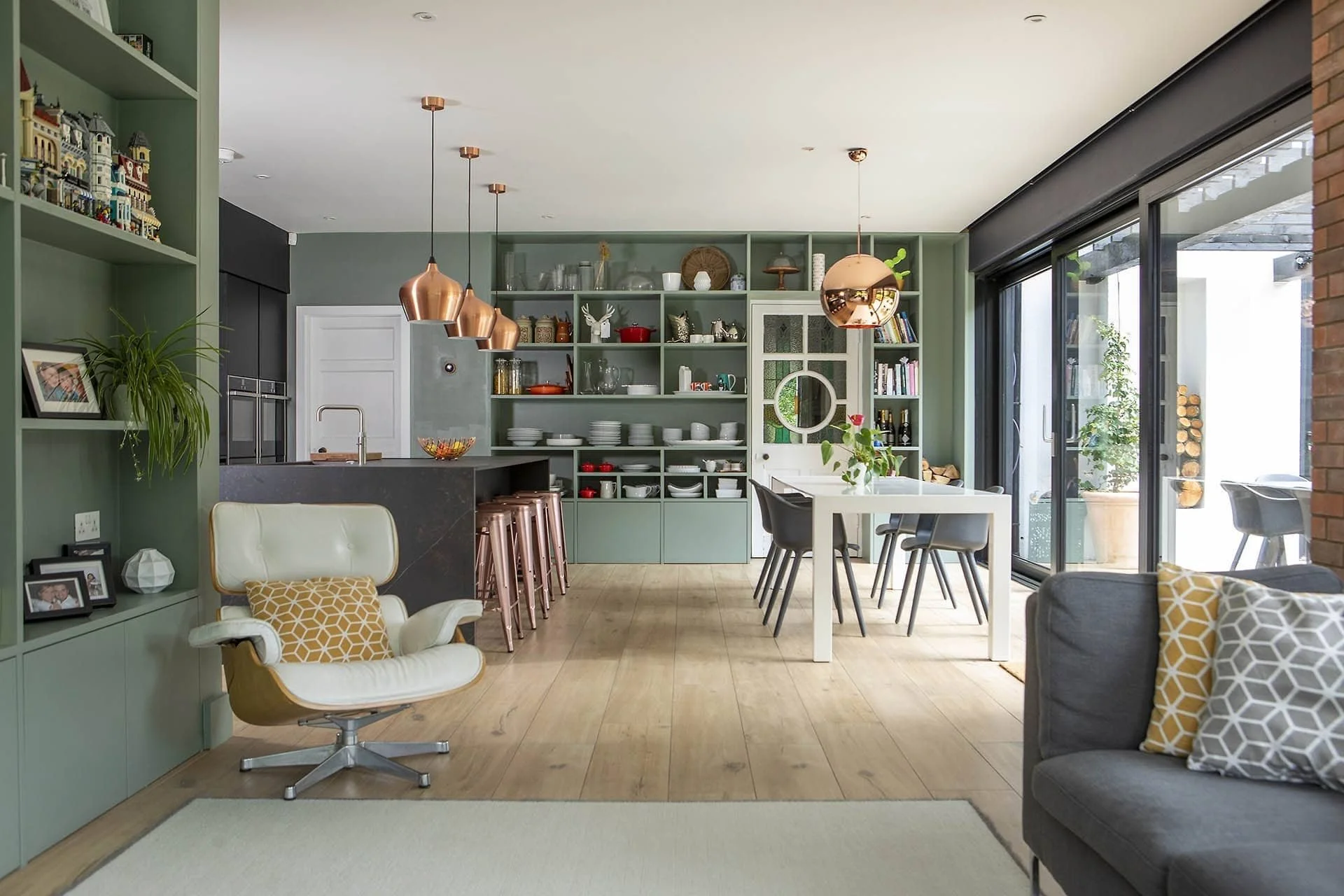
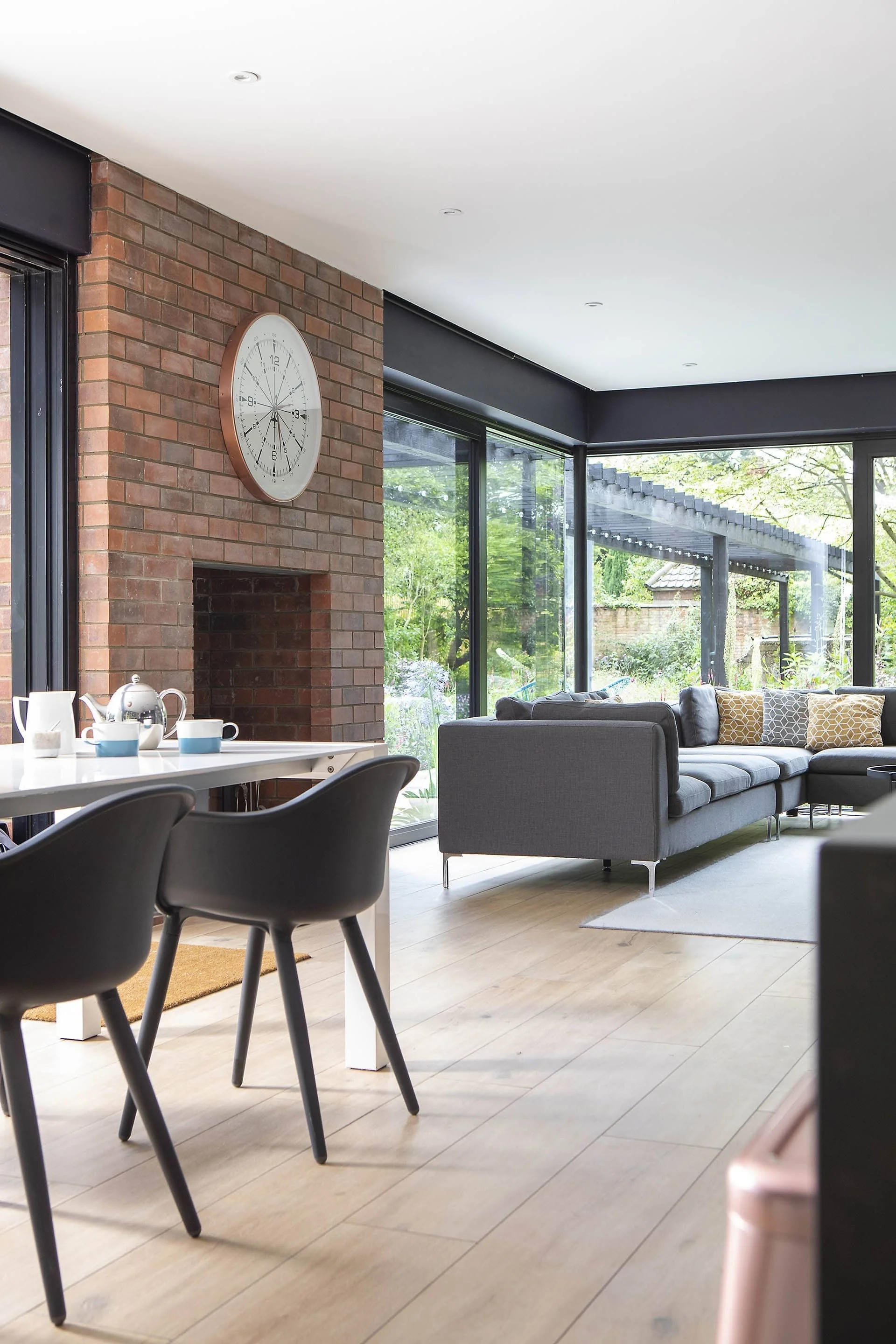
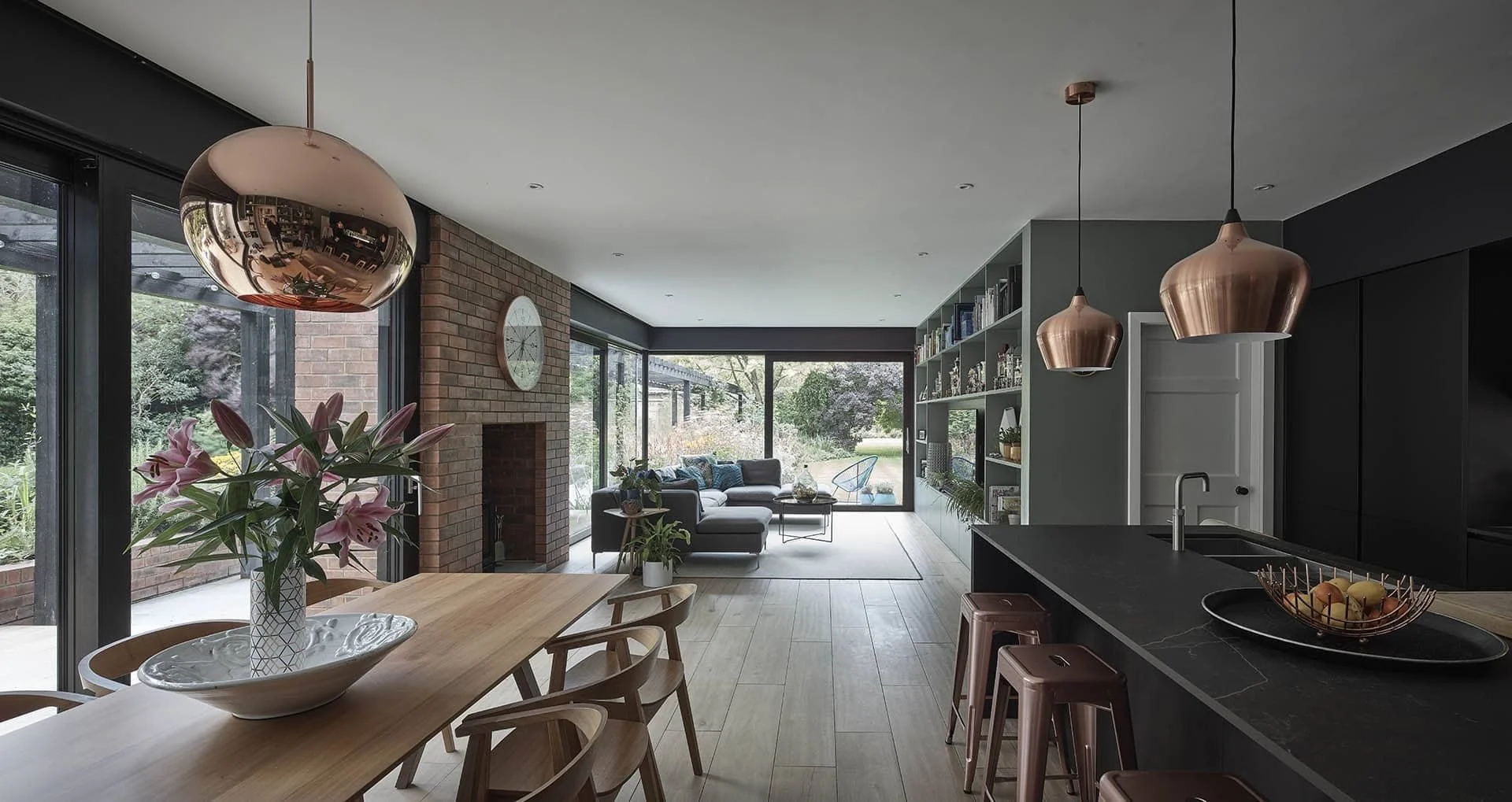
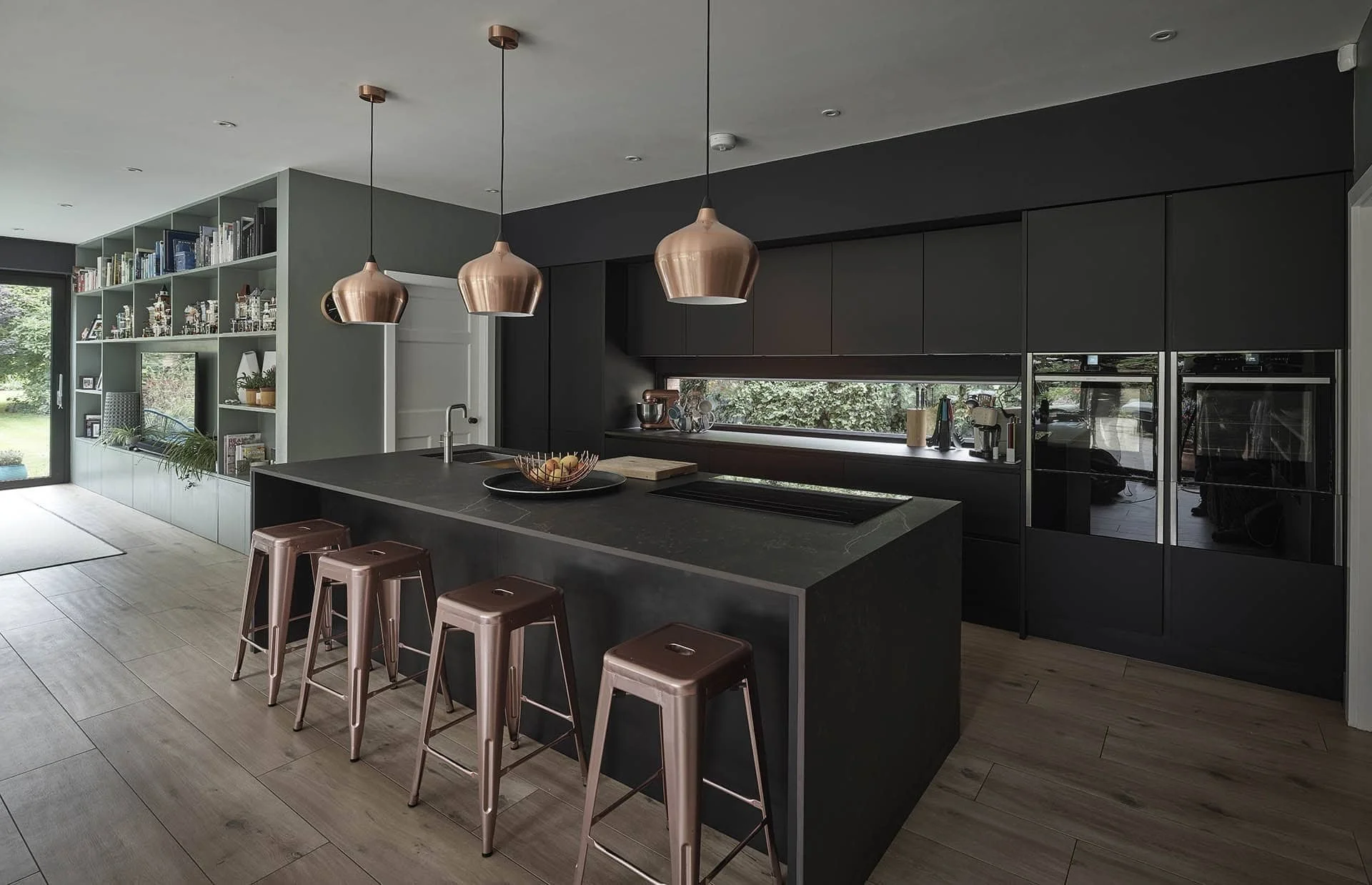
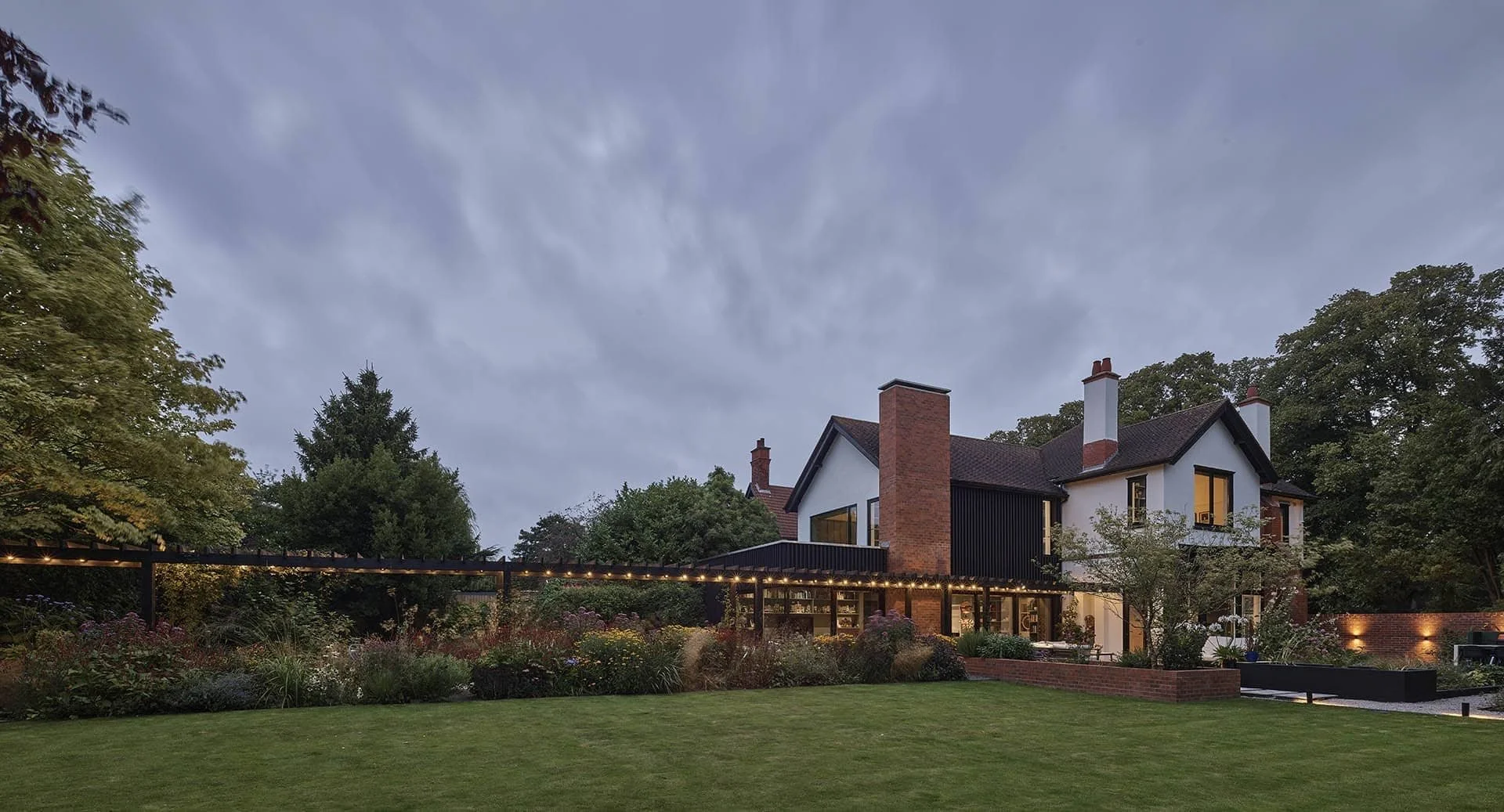
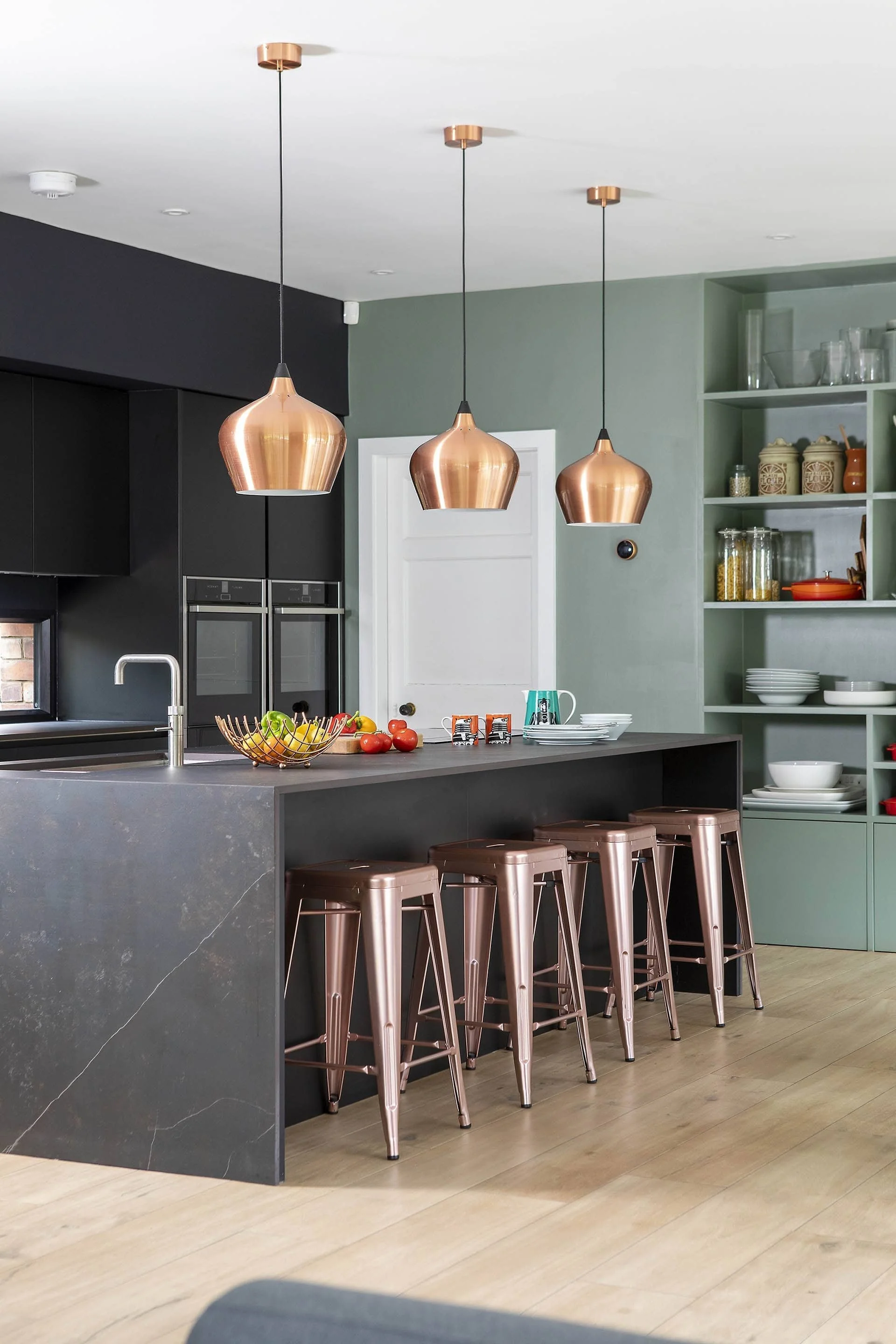
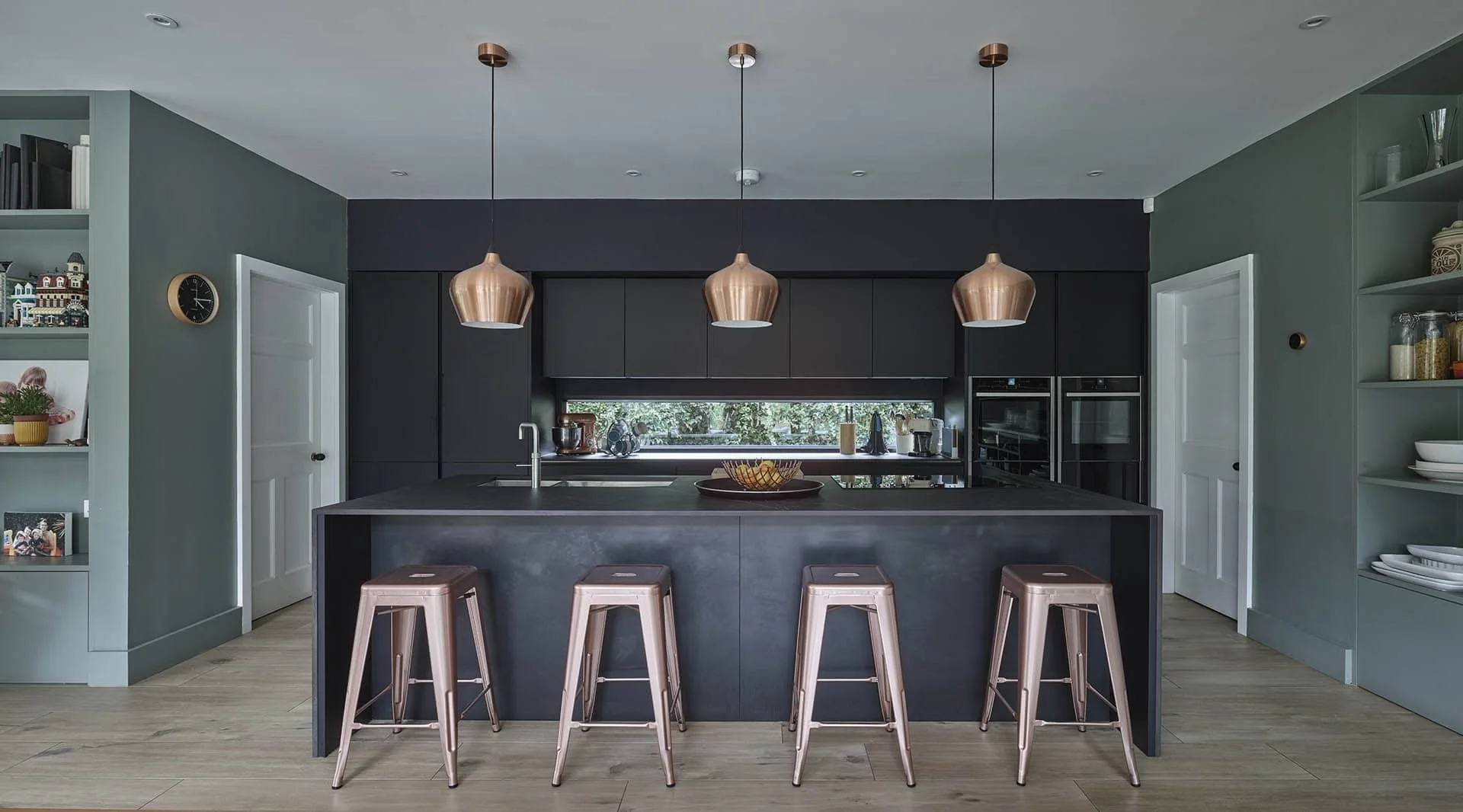
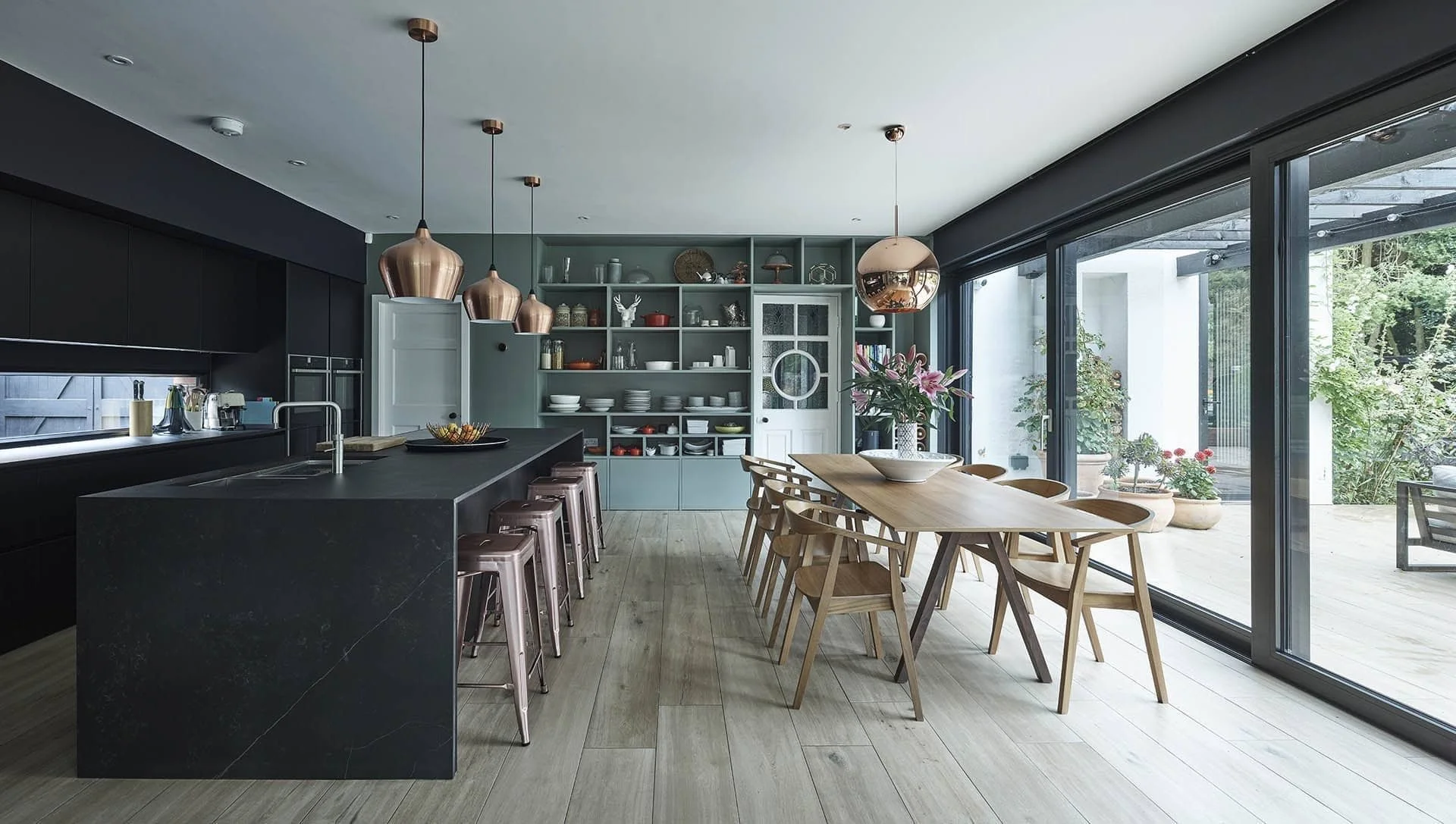
This matt black German kitchen sits inside a period Edwardian villa in central Grimsby, as part of a large rear extension and full house renovation.
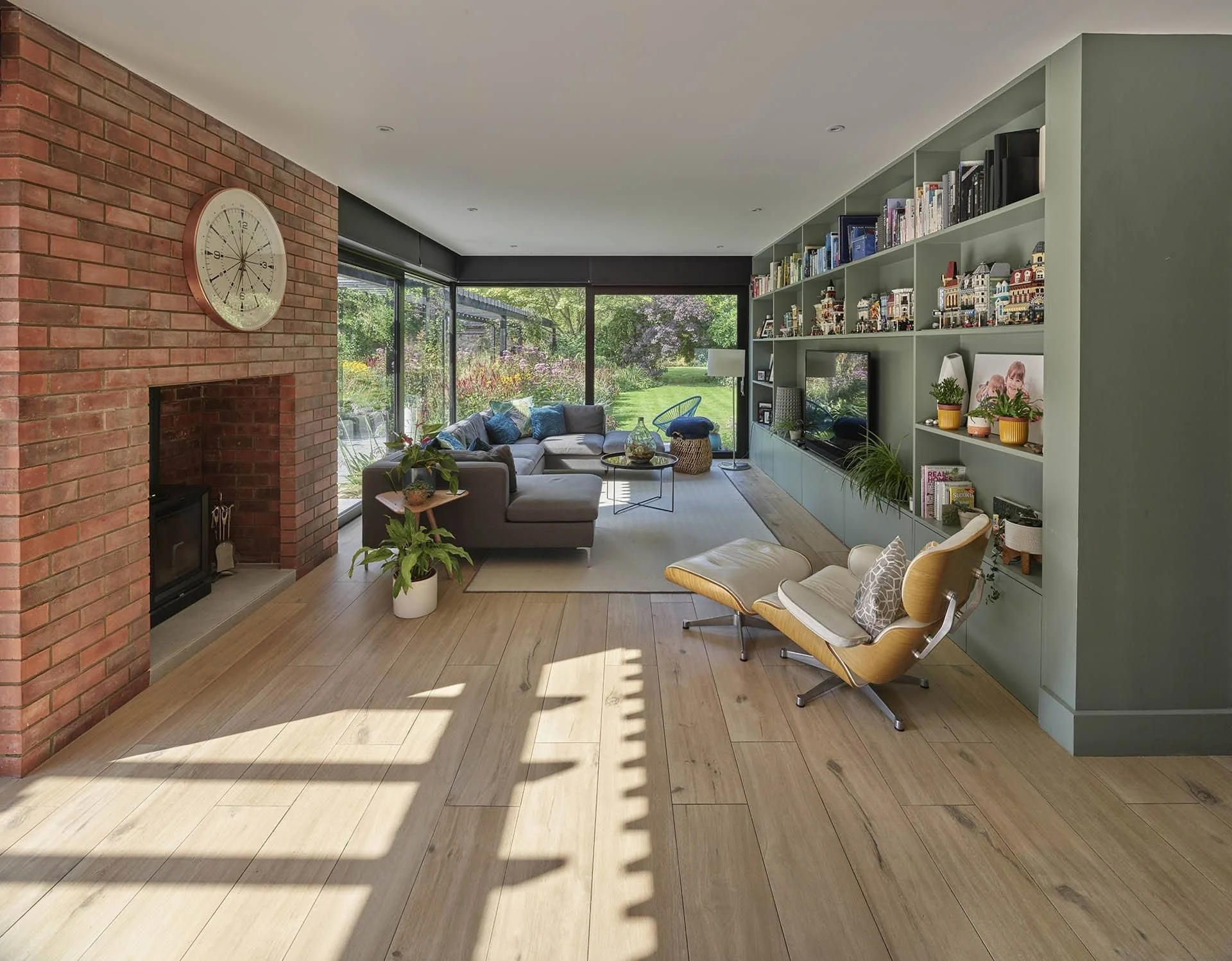
The contrast between the age and character of the original building and the clean, architectural lines of the kitchen is what makes the project work. It does not try to blend in with the house, but it does not fight it either. The result feels deliberate, well resolved and very easy to live with.
Project Details
-
The client was a director at ID Architecture, and the project was a full renovation of his own home: an Edwardian villa with Tudor and Victorian features on one of the more characterful roads in central Grimsby. The brief was to be sympathetic to the house while creating a genuinely modern kitchen and living space in the new extension. It was not a project where anything was going to be left to chance.
As an architect, the client was specific about everything. Dimensions, finishes, proportions and tones had all been thought through carefully before the conversation with Samuel Neal began. He had a clear idea of what he wanted the kitchen to look like. What he needed was someone who could take that vision and make it work in practice.
-
Sam worked directly with the client to refine the layout so it would function properly alongside the strong aesthetic direction. Architects tend to be precise about design intent, and this client was no different, but there were practical adjustments needed to make the kitchen work as planned. The wall between the main kitchen and the utility was tweaked to gain a small but meaningful amount of space, which allowed the 2.4-metre island units to be configured to a consistent 600mm and the circulation to feel right. This matters more than it might sound: varying door widths create visual irregularity that undermines the clean, handleless look the design relied on.
One of the more demanding aspects of the installation was working to a letterbox window on the back wall, which meant all levels, positions and measurements had to be precisely planned before the floor of the extension was even in place.
-
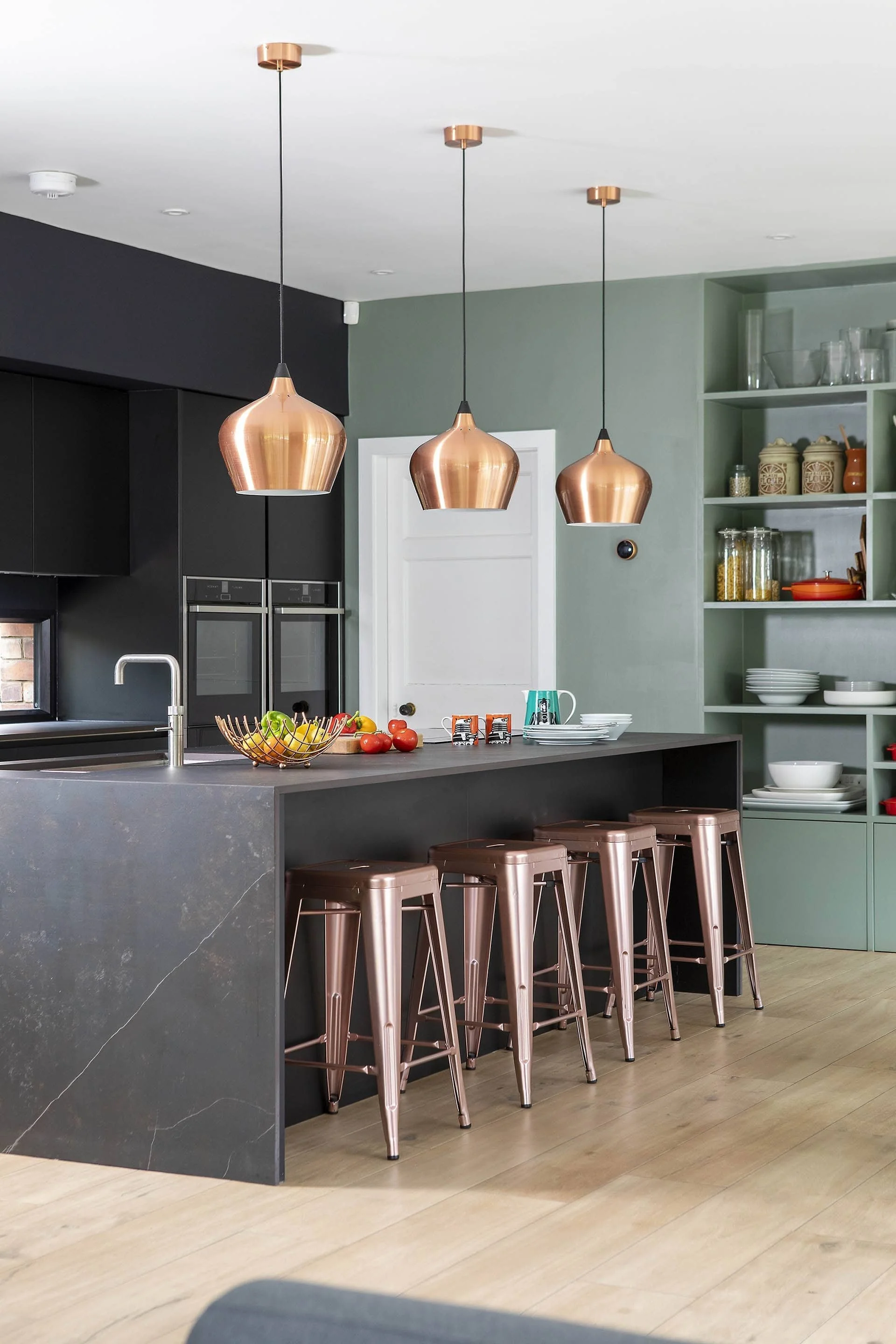
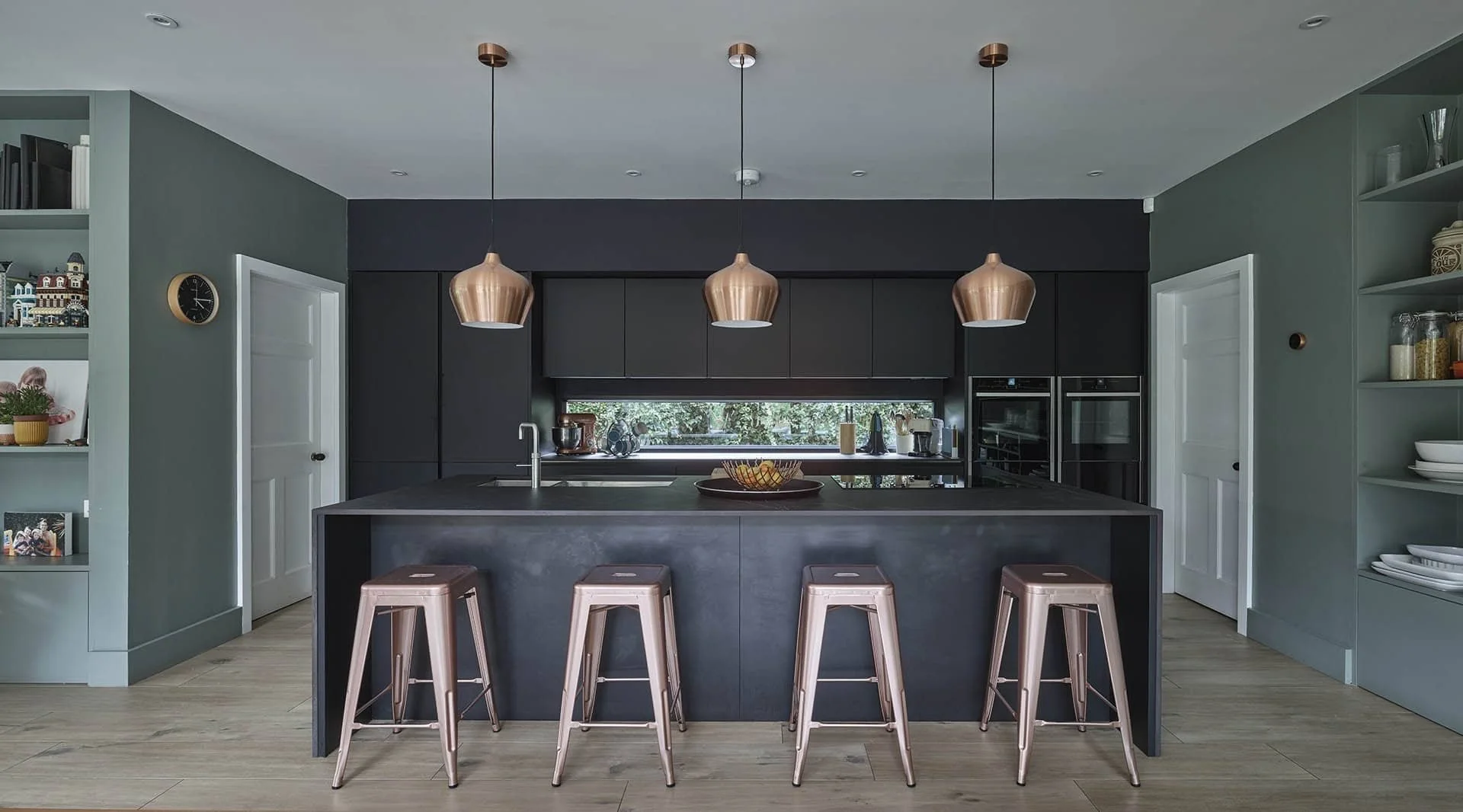
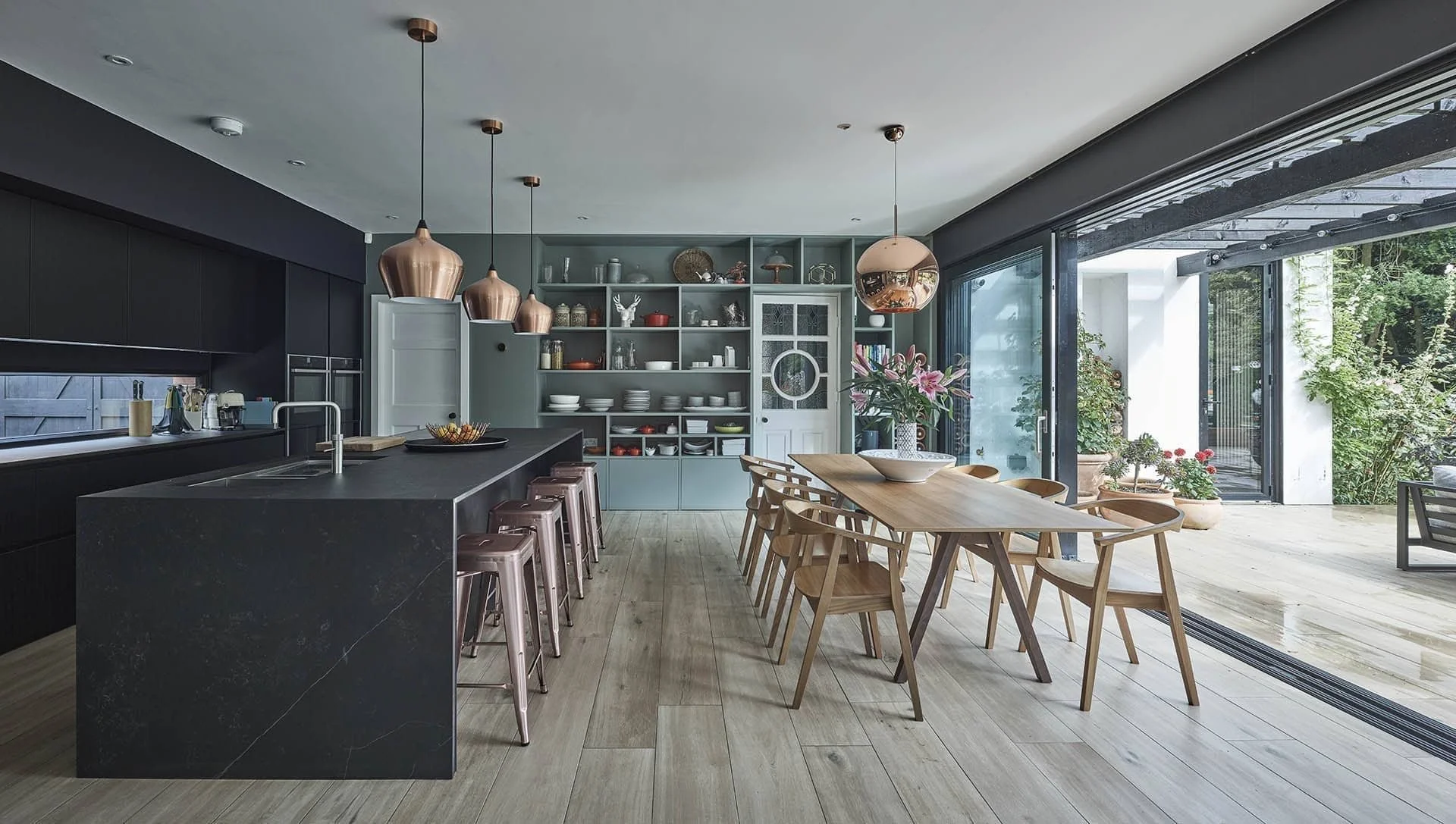
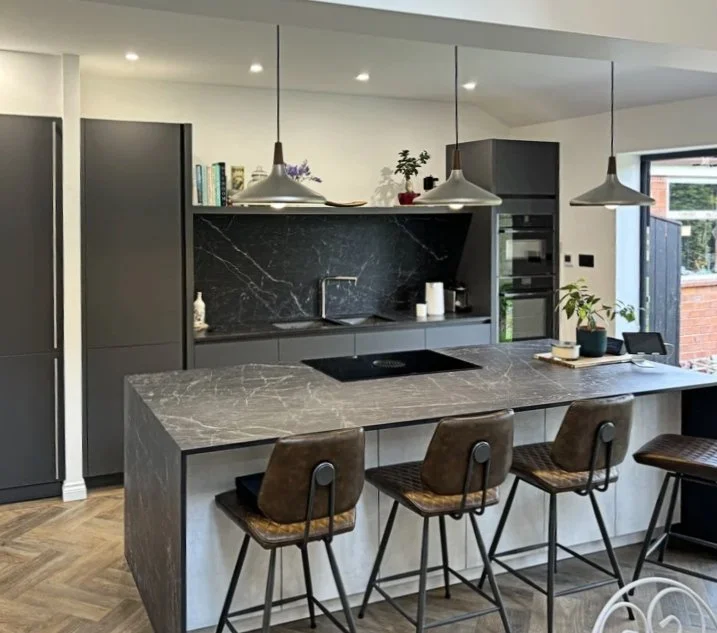
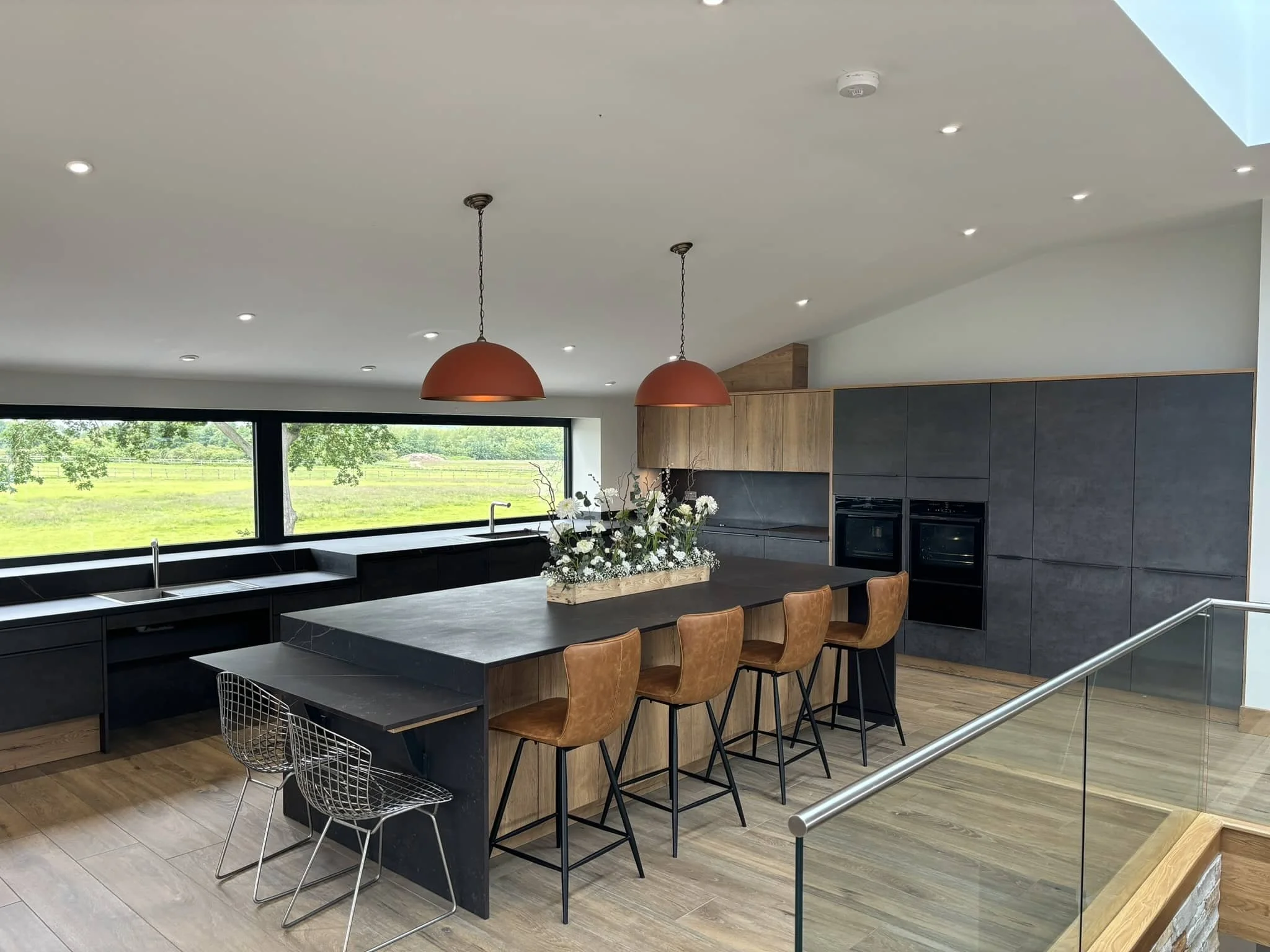
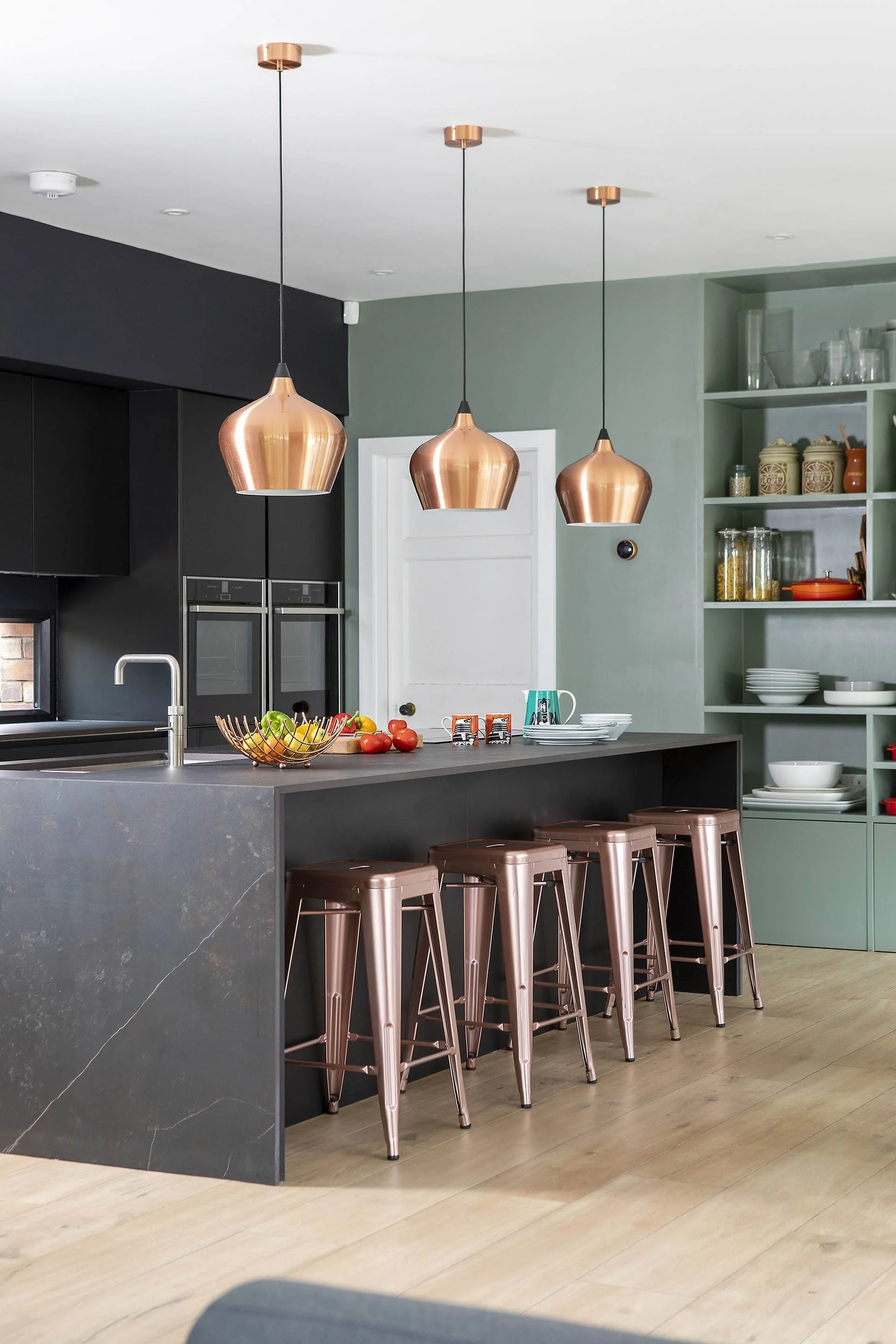
The cabinetry is Häcker in a matte black finish (Top Soft Black range), with true handleless doors giving the kitchen its characteristic clean horizontal lines. Dekton Kelya worktops were specified throughout, including mitred waterfall gables to both ends of the island. Kelya is a surface that has continued to be specified by the same architect practice on subsequent projects, which says something about how well it performs and how consistently it reads in this kind of interior.
Appliances are Neff throughout, with a venting hob on the island, a Quooker tap, an integrated dishwasher, larder fridge and larder freezer, and two single ovens and warming drawers. Integrated large-capacity bins were included from the start, keeping the kitchen practical without compromising the visual clarity of the design.
-
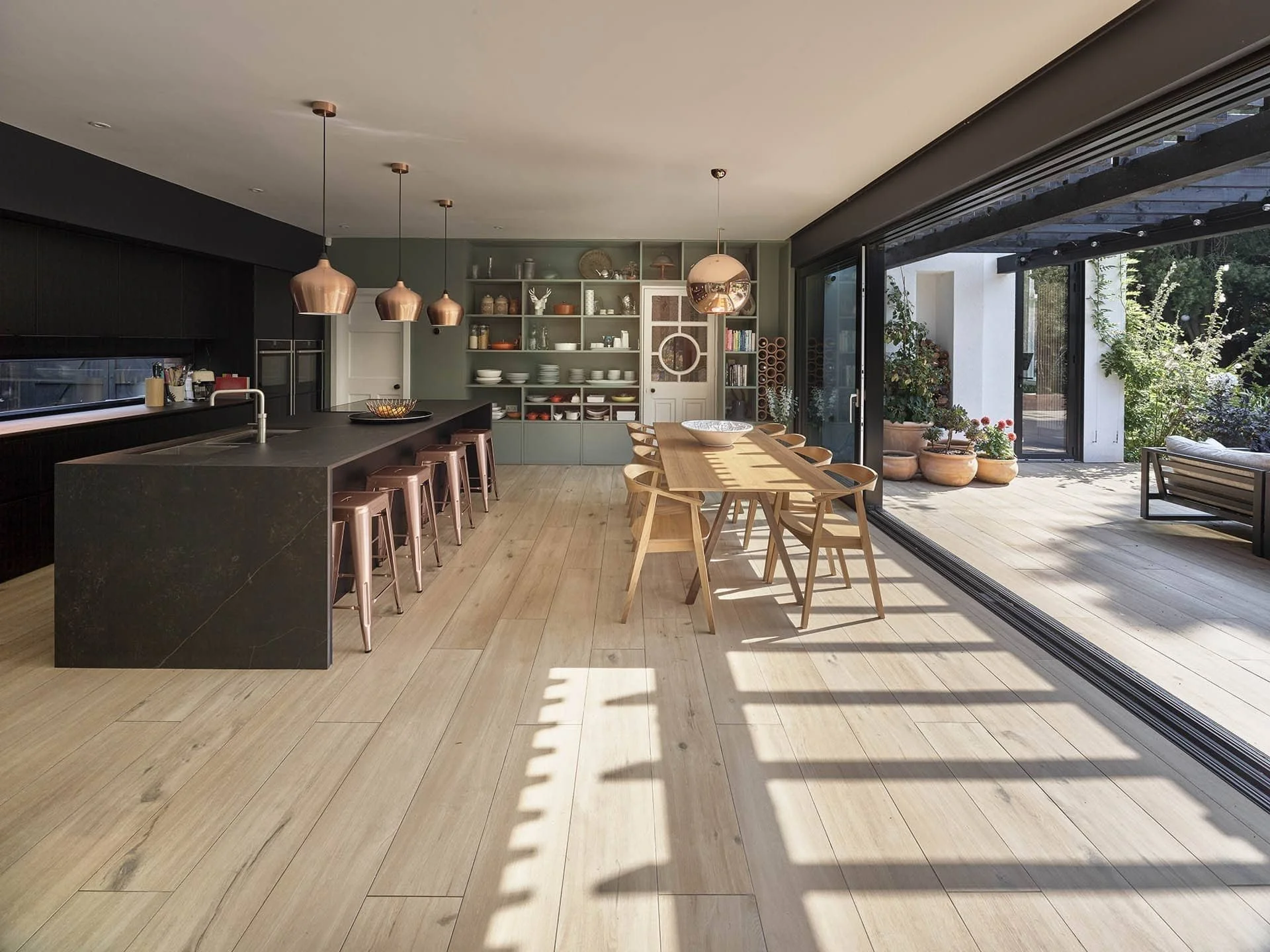
The island is the visual and practical centre of the kitchen. With the sink and venting hob both positioned on the island, it becomes the main working area of the room, keeping the back runs free for storage, appliances and preparation. The breakfast bar area has copper-toned bar stools chosen by the client, with matching pendant lights above. The copper detailing against the matte black cabinetry is a strong combination, warm enough to stop the kitchen feeling cold without softening the overall architectural feel.
The back wall run includes a larder fridge and larder freezer to one side, with the two single ovens on warming drawers to the other and a prep area between them. A letterbox window is set into the wall behind this run, helping bring natural light into what might otherwise feel like a heavier elevation of dark cabinetry. The feature lighting throughout helps the kitchen work well in the evening, when the extension is used as a living and entertaining space as much as a cooking one.
-
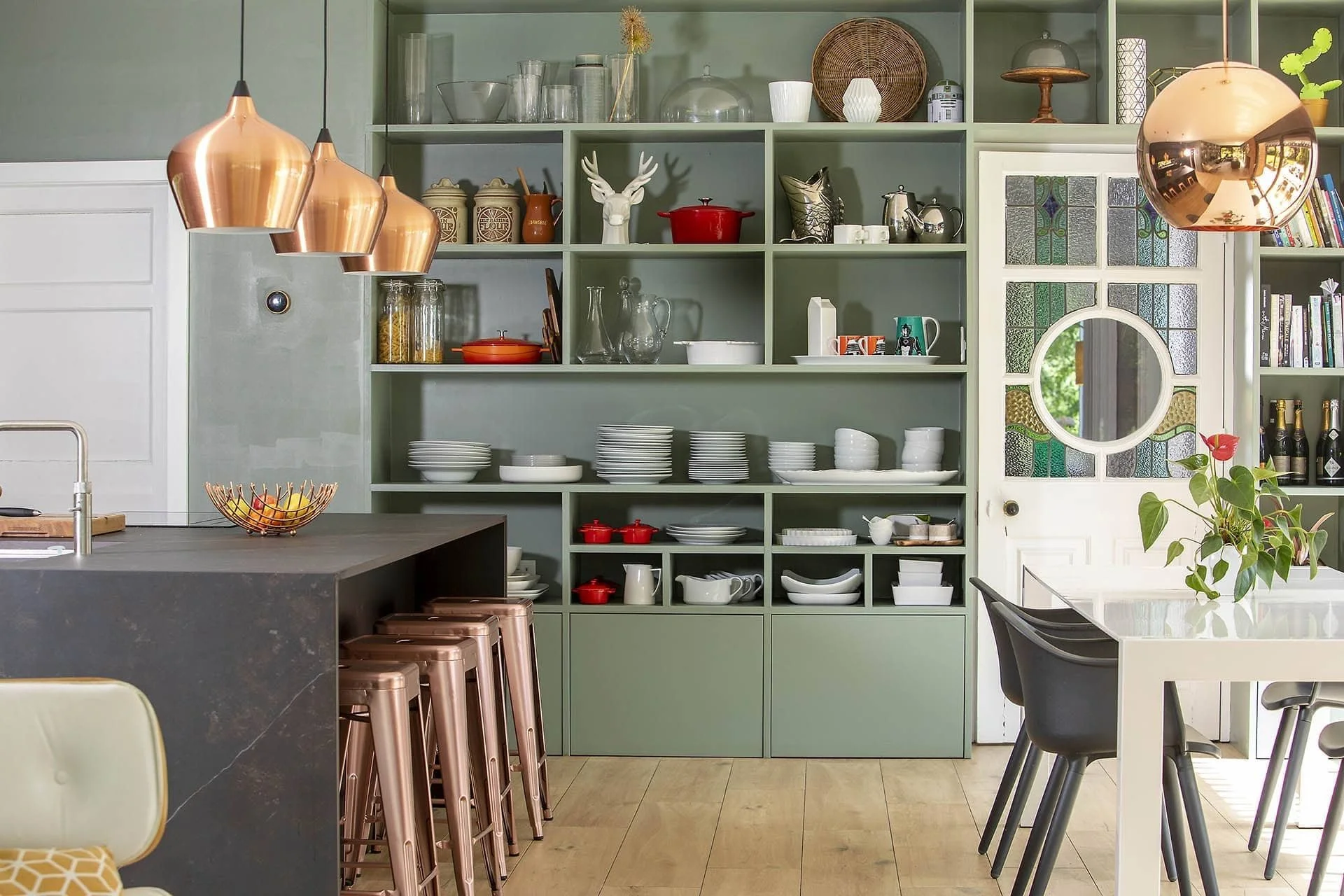
A utility room sits directly off the main kitchen, accessed through a door visible in the space. The same matte black finish and Dekton worktops carry through into the utility, so the practical space feels like a continuation of the kitchen rather than a separate afterthought. A freestanding washer and dryer, along with storage units, keep the room functional and well organised. Photography of the utility is not available, but the material consistency between the two spaces is worth noting as part of the overall design approach.
-
Working with an architect client on his own home requires a particular kind of involvement. The design intent was strong and detailed, and Sam's role was to ensure that intent translated into a kitchen that worked as well as it looked. That meant close collaboration at the design stage, careful planning around the structure of the extension as it was being built, and precise management of the installation itself. Sam remained closely involved throughout, attending key stages to make sure the finished kitchen reflected what had been agreed.
-
The finished kitchen holds its own within a house full of architectural character. The matte black cabinetry, Dekton worktops and copper details sit comfortably in the new extension without trying to replicate the period features of the original building. It is a confident, well-executed design that has aged well. The same architect practice continues to specify Dekton Kelya on subsequent projects, which is as good an endorsement as any.
Planning your own kitchen project? Visit the Samuel Neal showroom in Grimsby or book a design appointment to get started.